
Have you ever looked up at the night sky and marveled at its vastness, wondering what hidden wonders it holds? Among the constellations lies a celestial gem known as the Dolphin Nebula, a breathtaking bubble of gas and dust waiting to be explored. Buckle up, space fans, because we’re taking a dive into its dazzling depths!
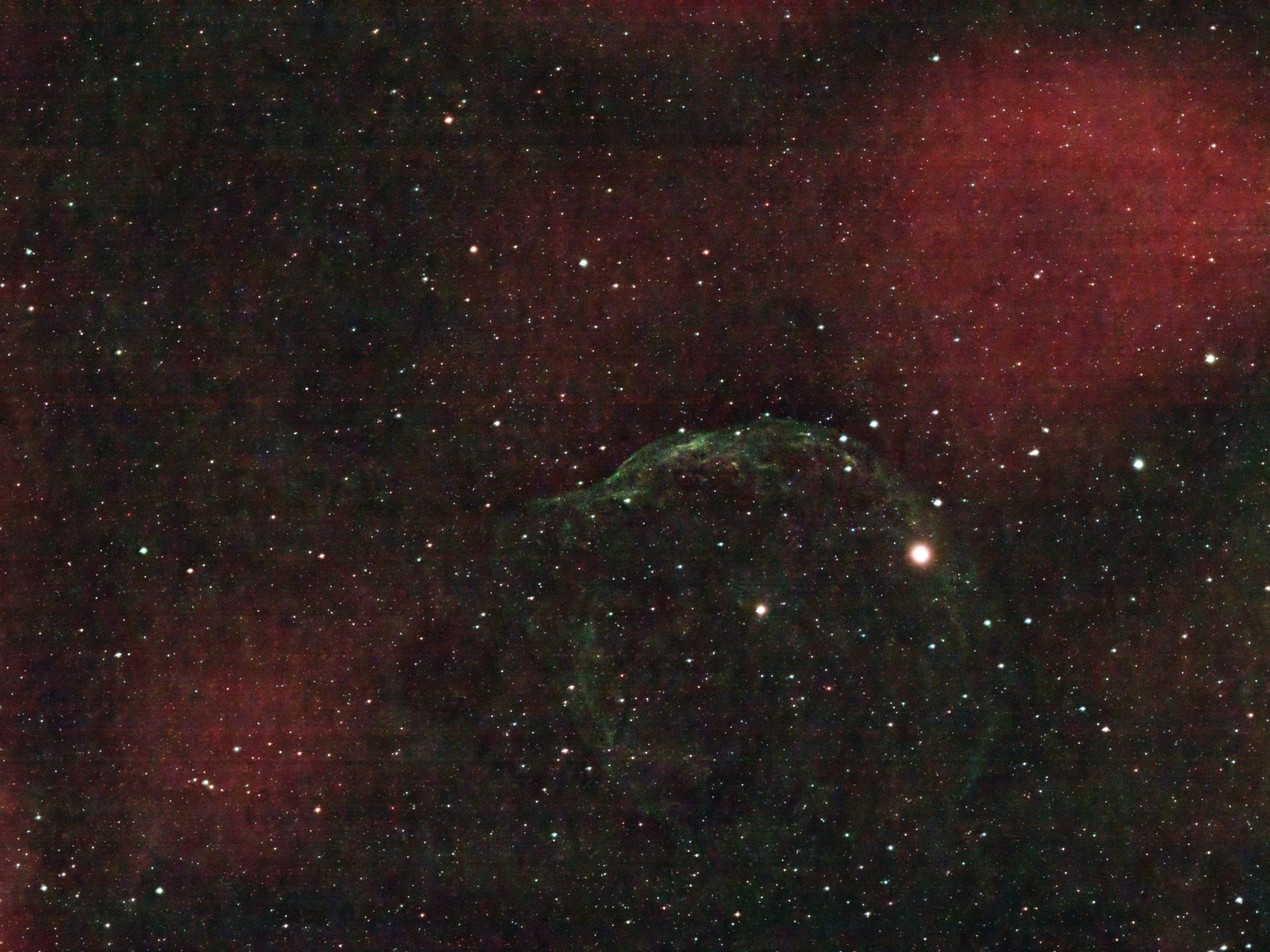
Here’s my image of the Dolphin Nebula, captured over 2 hours of integration data through Dual Band filter. SV550 80mm triplet refractor telescope from SVBony paired with their color one shot camera the astro cooled 405cc.
The imaging train is mounted on a ZWO AM5 mount and software used to capture is PHD2 for guiding and NINA for running the session. Data is processed with Pixinsight and Photoshop.
I feel this needs a lot more integration time, probably another 2 hours to really bring out more details in the Dolphins head.
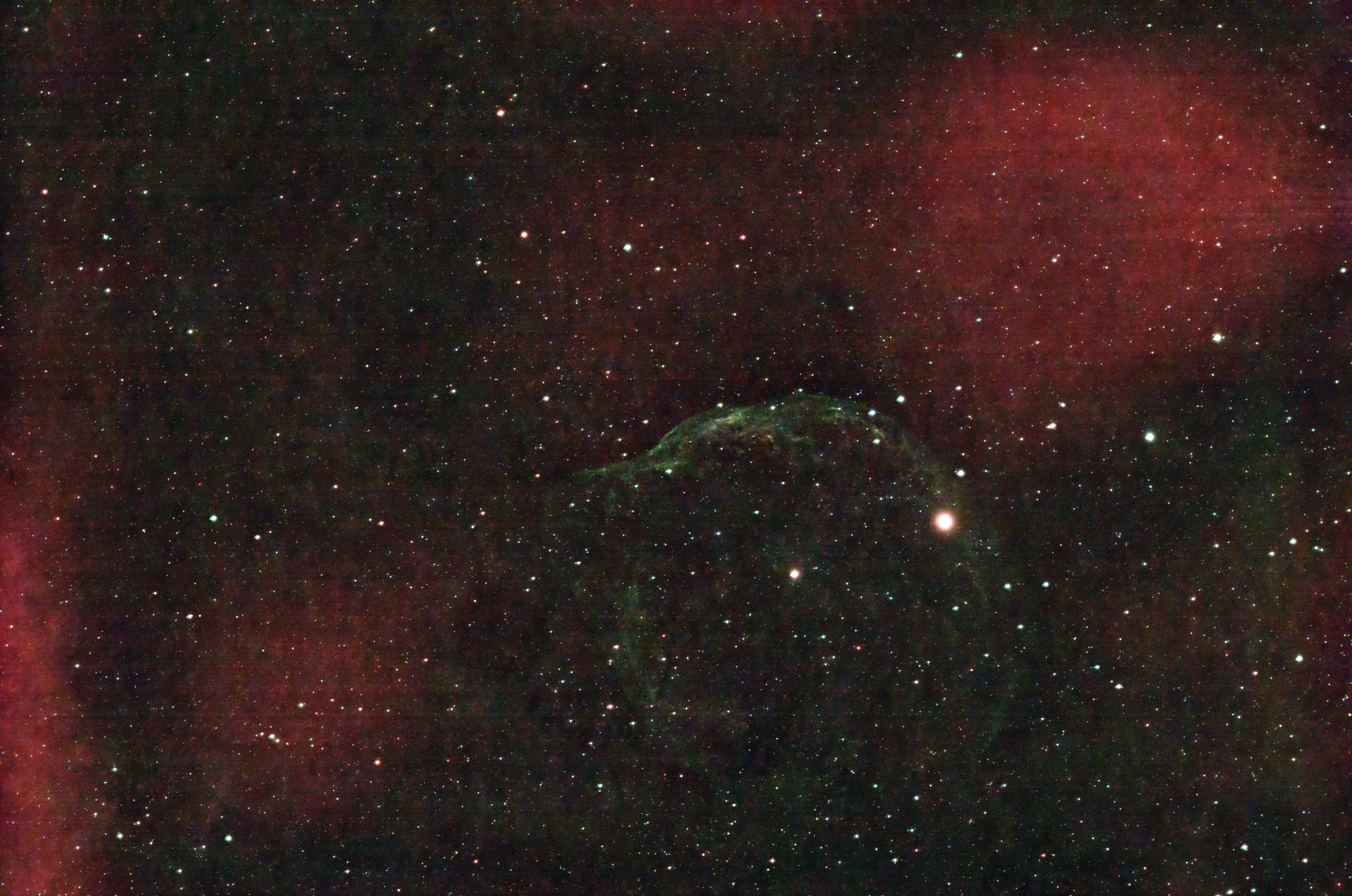
Nicknamed for its resemblance to a leaping dolphin, this nebula isn’t just visually captivating; it’s also a stellar nursery, brimming with newborn stars. But the real star of the show is a massive Wolf-Rayet star, EZ Canis Majoris, at its heart. Imagine a star 20 times more massive than our Sun, nearing the end of its life and throwing off intense winds that sculpt the surrounding gas and dust, creating the bubble shape we see today.
These powerful winds, clocking in at a mind-boggling 1,700 kilometers per second, are the architects of the nebula’s intricate structures. They carve out cavities, trigger the birth of new stars, and paint the canvas with vibrant hues of blue and red. Imagine, within this cosmic dance of creation and destruction, new stars are born from the very material ejected by their dying predecessor!
Located roughly 5,200 light-years away in the constellation Canis Major, the Dolphin Nebula isn’t visible to the naked eye. However, for astrophotographers with powerful telescopes, it’s a treasure trove of cosmic beauty. Images reveal intricate filaments, wispy tendrils, and glowing clouds, all testament to the dynamic processes at play.
But the Dolphin Nebula isn’t just a pretty picture; it’s a window into stellar evolution and the complex life cycle of stars. By studying its intricate structures and composition, astronomers can piece together the puzzle of how stars are born, live, and ultimately die, enriching our understanding of the universe around us.
So, the next time you gaze at the night sky, remember the hidden wonders that lurk beyond the naked eye. The Dolphin Nebula awaits, a testament to the vastness and dynamism of the cosmos, reminding us that even in the deepest ocean of stars, beauty and wonder abound.
Discover more from Nicks Astrophotography
Subscribe to get the latest posts sent to your email.
 Nicks Astrophotography