
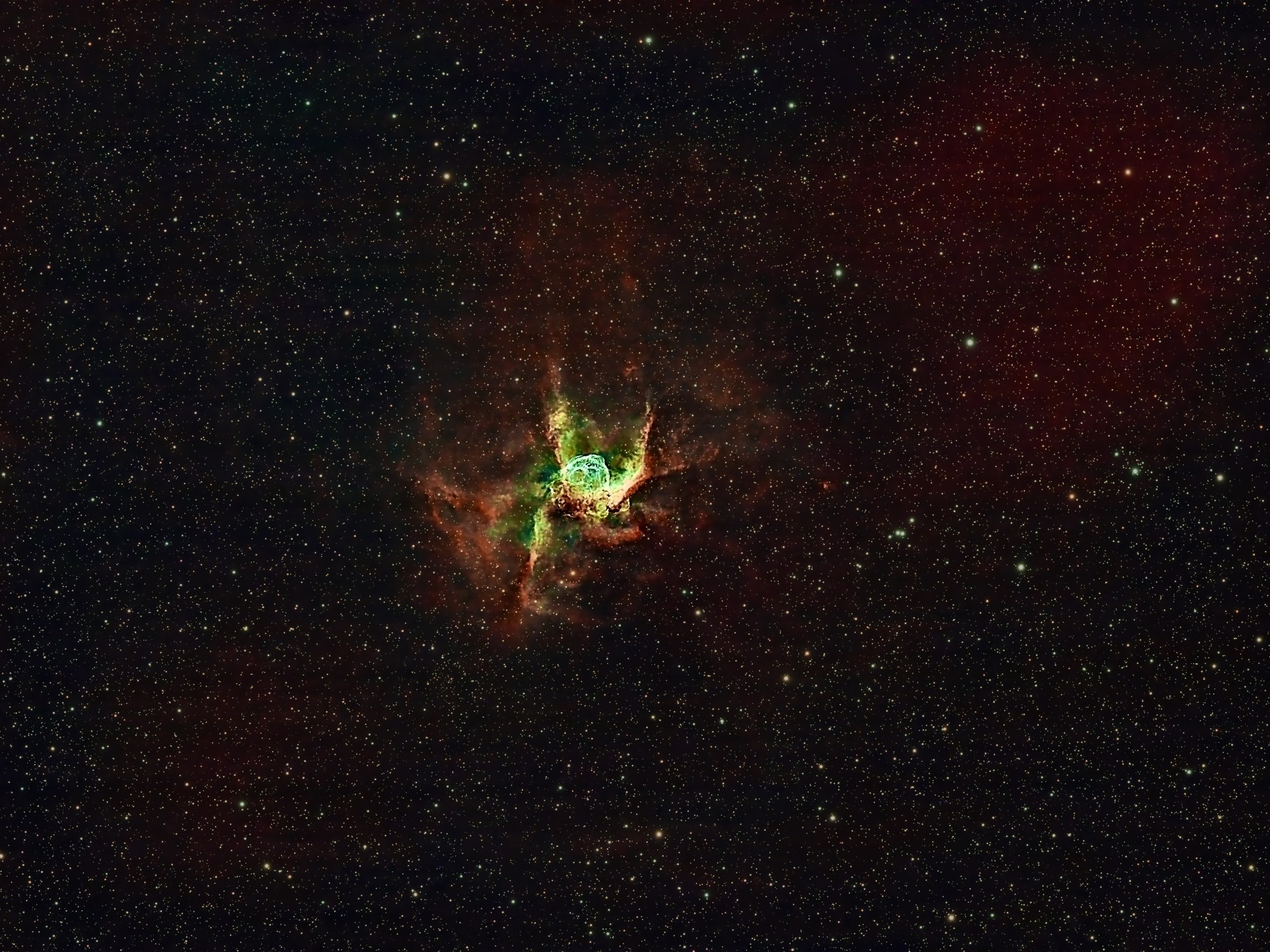
In the celestial realm of Carina, amidst swirling clouds of gas and dust, there is a cosmic visage worthy of a god. This is the Thor’s Helmet Nebula. This awe-inspiring formation is aptly named for its resemblance to the Norse thunder god. It is a testament to the sculpting power of newborn stars. It showcases the breathtaking beauty of the universe.
A Stellar Sculpting Act:
Thor’s Helmet was carved from the Carina Nebula. This nebula is a vast star-forming region roughly 7,600 light-years away. It is a testament to the forces shaping the cosmos. Intense radiation and stellar winds come from nearby massive stars. They erode the surrounding gas clouds. These forces sculpt the iconic profile of the god with his flowing beard and piercing gaze.
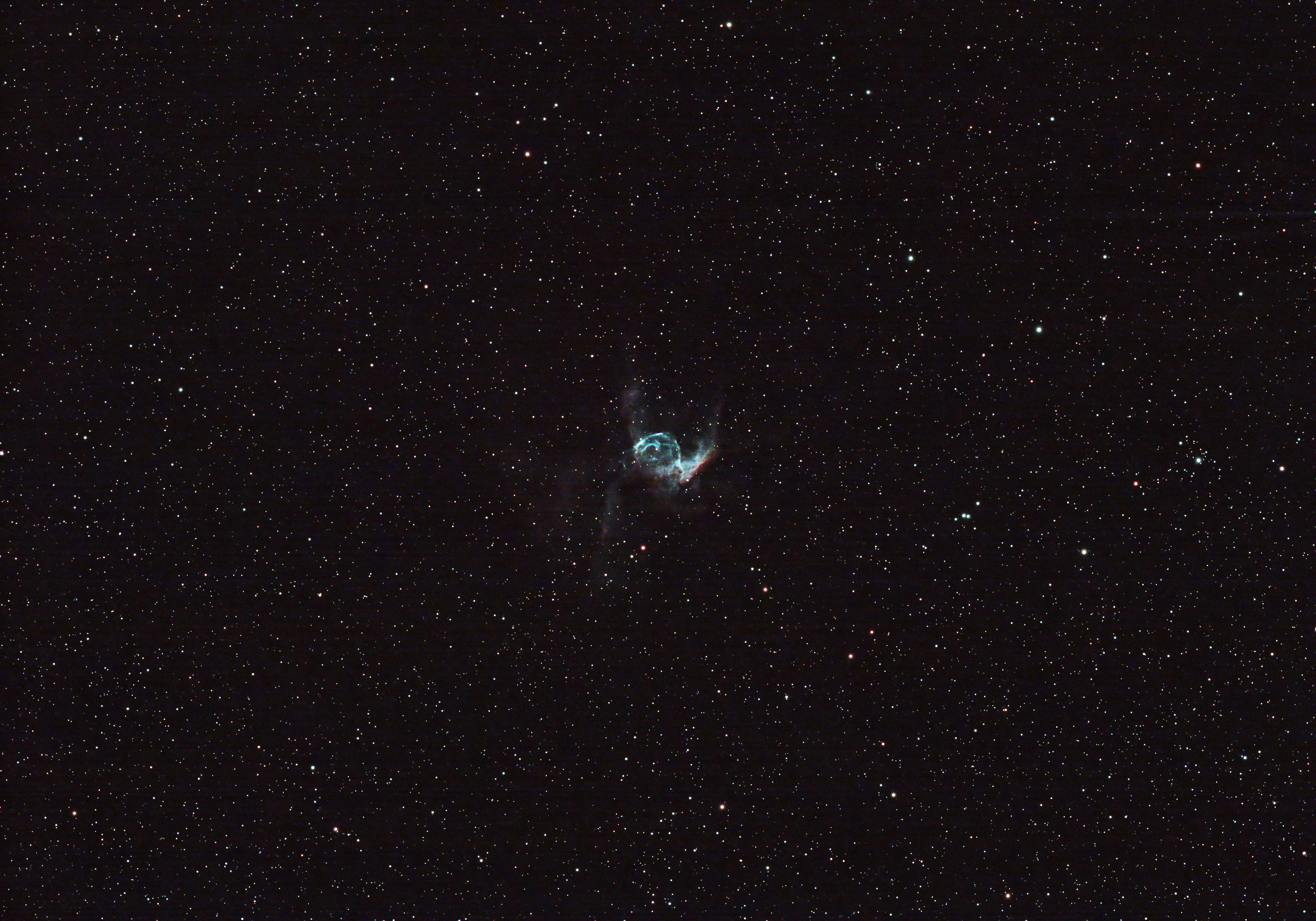
80mm f6 480 f/l refractor
SVBony 405cc one shot color camera cooled to -5°C
ZWO AM5 mount
Processed with Pixinisght and Photoshop
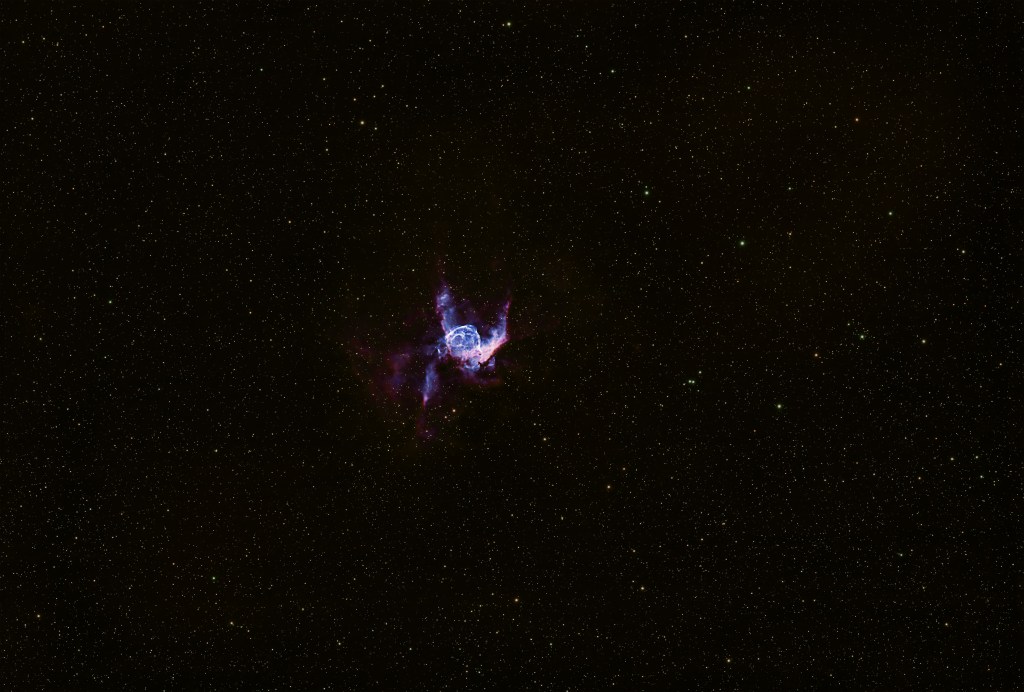
The above image is the same scope and camera, but this time it was captured through a dual pass filter. These are 300 second exposures, totaling around 4 hours of data. You can see how the dual pass filter isolates more of the nebula against he background, increasing it’s contrast.

Now totaling 6 hours of data, much more of the surrounding dust and gas is coming through, especially the red cloud in the upper right. My goal will be to accumulate around 10-12 hours of data on this target. Below is a cropped version of the above.
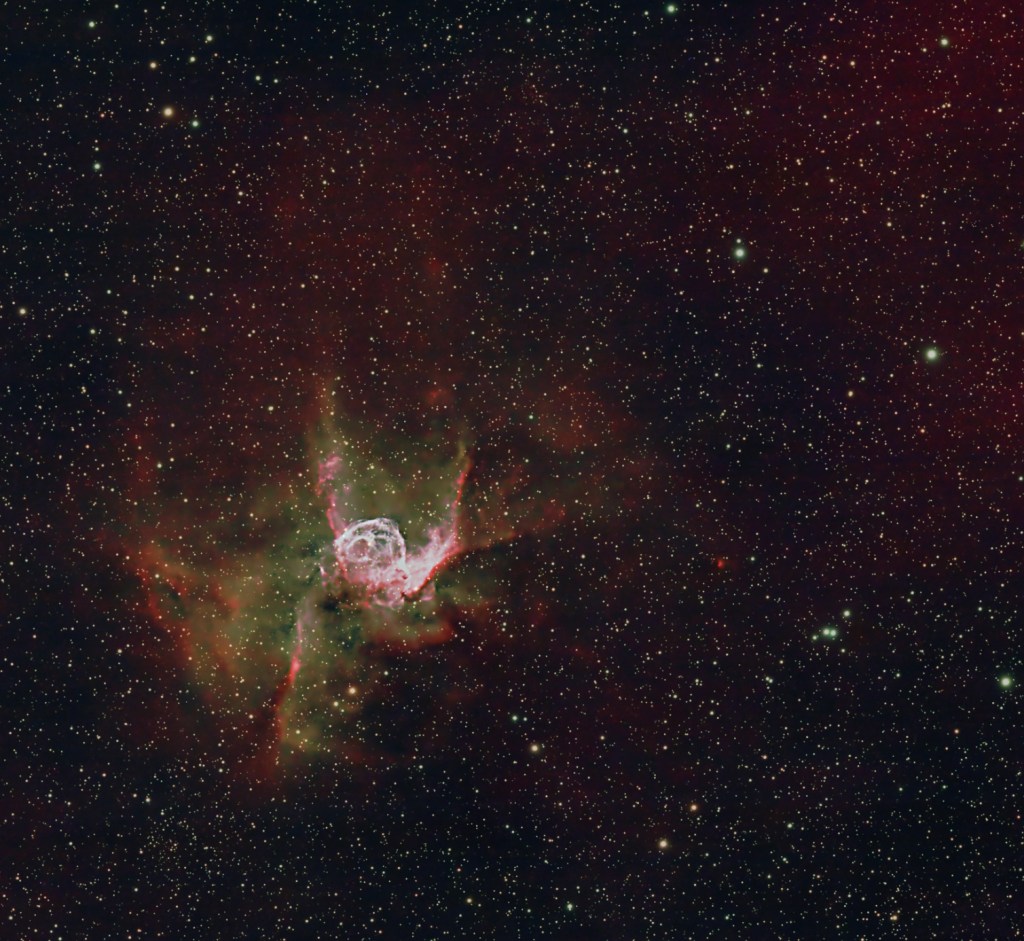

Here’s the Thors head Nebula with a total now of 8 hours of dual band data.

The above image is a reprocessing of the dual band data with a different processing technique. I found my earlier images were a little over saturated and over sharpened. I improved this by using a luminance layer in Photoshop to control the brightness and sharpness. This method avoids overdoing the saturation when stretching only the RGB channels.
A Beacon of Stellar Birth:
Embedded within the nebula’s depths are newly formed stars, their ultraviolet light illuminating the surrounding gas and triggering the formation of new celestial bodies. These young stars, still shrouded in their dusty nurseries, are responsible for the nebula’s vibrant hues, ranging from deep reds and oranges to delicate pinks and blues.
A Cosmic Chameleon:
The Thor’s Helmet Nebula isn’t a static portrait; it’s a dynamic dance of gas and dust. Over time, the sculpting forces and the relentless march of stellar evolution continuously alter the nebula’s shape, transforming the god’s visage into new and ever-evolving forms.
A Challenge for Skywatchers:
While visible to the naked eye under exceptionally dark skies, Thor’s Helmet truly comes alive through the lens of a telescope or astrophotography camera. Long exposure times reveal the intricate details of the nebula’s sculpted features, the delicate tendrils of gas, and the vibrant glow of newborn stars hidden within its depths.
A Window into the Universe:
Studying the Thor’s Helmet Nebula provides astronomers with valuable insights into the processes of star formation, stellar evolution, and the dynamics of interstellar gas clouds. By understanding how Thor’s Head was sculpted and how it continues to change, we gain a deeper appreciation for the forces that shape and govern our universe.
So, the next time you gaze up at the night sky, take a moment to appreciate the Thor’s Head Nebula. This celestial wonder is a reminder of the vastness and dynamism of the cosmos, where darkness and light dance together in a breathtaking cosmic ballet.
Beyond the Blog:
- Challenge yourself: If you’re lucky enough to be under a dark sky, try spotting the Thor’s Head Nebula with your naked eye. Look for a faint, reddish glow near the constellation Carina.
- Explore further: Online resources and astrophotography communities offer stunning images and detailed information about the Thor’s Head Nebula. Dive deeper and discover the fascinating science behind this cosmic marvel.
- Become a citizen scientist: Participate in projects like Globe at Night, which helps astronomers track changes in sky brightness and light pollution. By contributing your observations, you can help protect the dark skies needed to appreciate the Thor’s Head Nebula and other celestial treasures.
Remember, the universe is full of wonders waiting to be discovered. So, keep looking up, keep exploring, and never stop marveling at the awe-inspiring beauty of the cosmos.
I hope you enjoyed this journey into the heart of the Thor’s Helmet Nebula!
Discover more from Nicks Astrophotography
Subscribe to get the latest posts sent to your email.
 Nicks Astrophotography