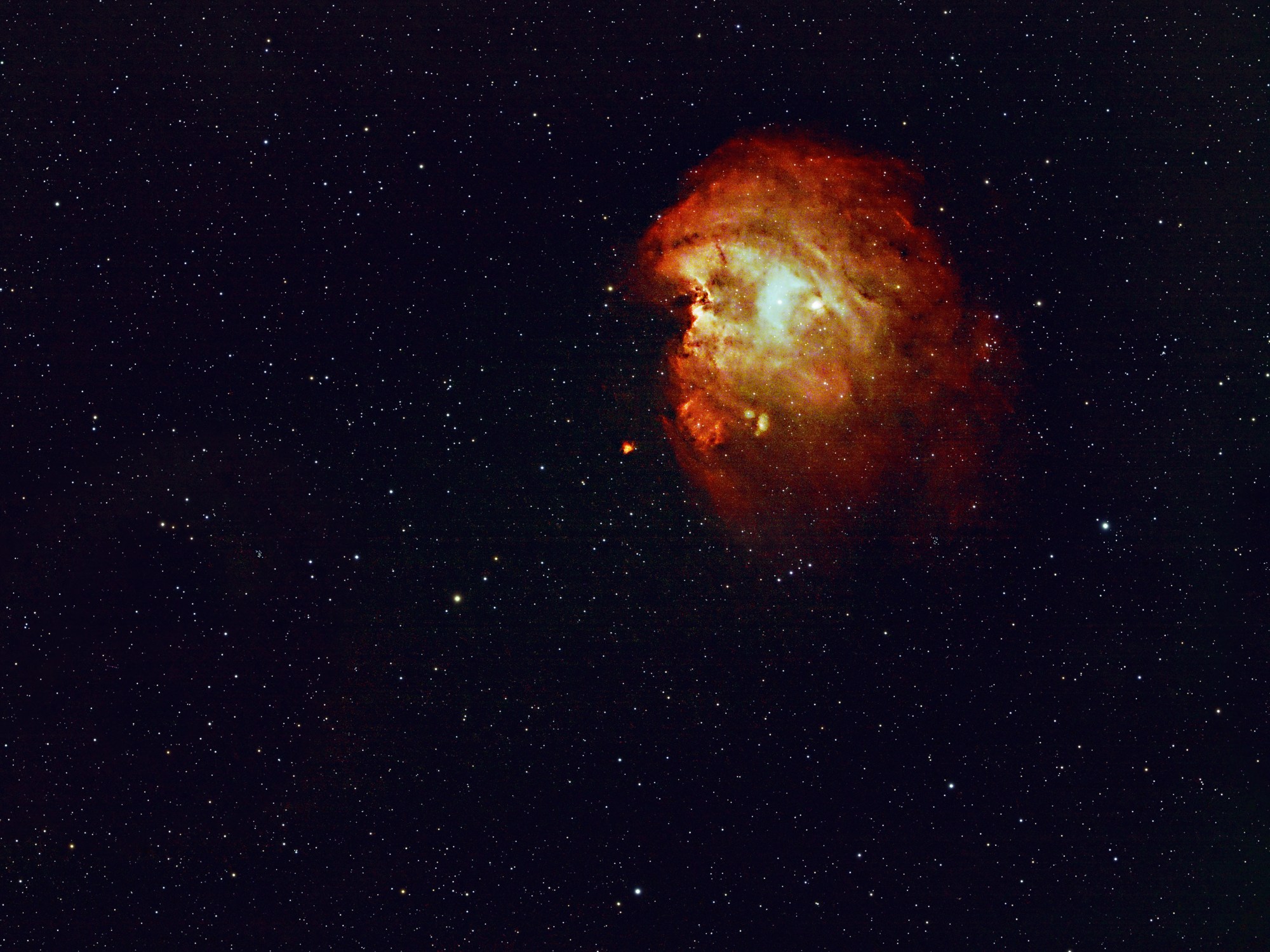
Soaring high in the constellation Orion, the Monkey Head Nebula, also known as NGC 2174, is a breathtaking vista of gas and dust where new stars are born. This celestial nursery, located around 6,400 light-years from Earth, boasts a characteristic shape that resembles a monkey’s head, earning its whimsical nickname.
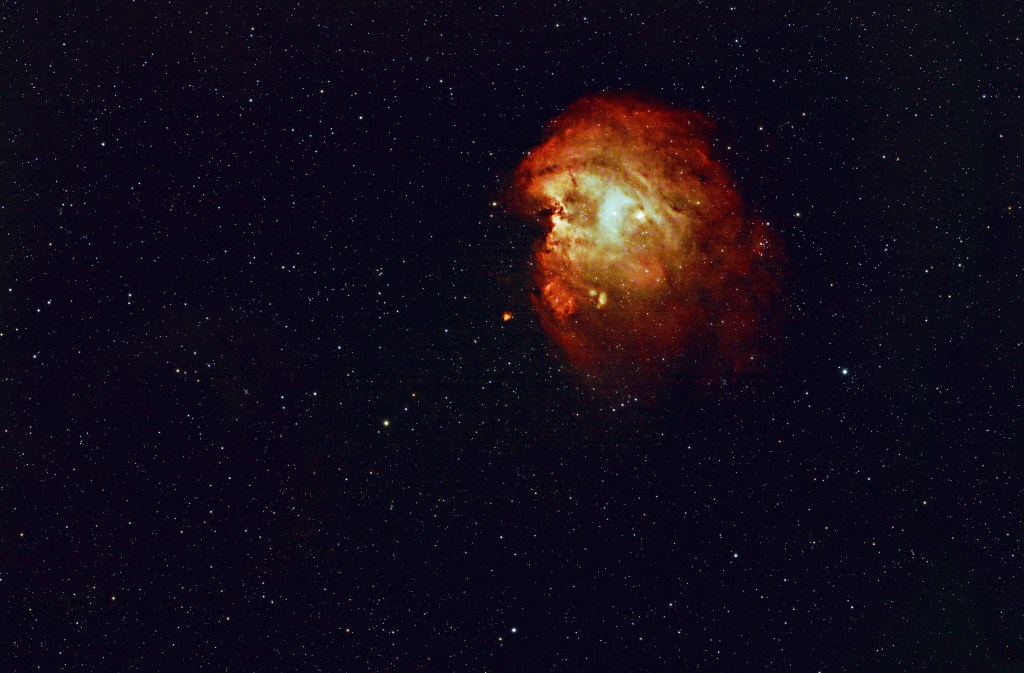
The vibrant hues of the nebula are a result of a cosmic dance between gas and dust. Primarily composed of hydrogen, the gas is energized by the intense radiation from young, hot stars embedded within the nebula. This energization causes the gas to glow, emitting the vibrant reds, oranges, and blues we see in captivating images.
The above image was captured with an 80mm f6 apochromatic refractor scope at 480mm focal length. A cooled Astro camera at -5°C with a gain of 110. 150 second exposures, a total of 2.5 hours of data. Captured through a dual band filter that narrows down the light gathering to the Hydrogen and Oxygen bands.
However, the nebula isn’t just a canvas of vibrant colors. Dark, twisting tendrils of dust weave through the glowing gas, creating the impression of a monkey’s face. These dust lanes are not merely passive observers; they play a crucial role in the nebula’s ongoing story.
The dust acts as a cosmic sculptor, sculpted by the powerful stellar winds and radiation from the young stars. These winds carve out towering pillars and intricate cavities within the nebula, shaping its otherworldly landscape.
The Monkey Head Nebula is not a static scene; it’s a dynamic environment where star formation is in full swing. The intense radiation and winds from the young stars eventually erode the very material that birthed them, creating a delicate balance between creation and destruction.
Studying the Monkey Head Nebula allows astronomers to gain valuable insights into the complex and beautiful process of star birth. It serves as a reminder of the constant cycle of creation and destruction that underpins the universe.
Discover more from Nicks Astrophotography
Subscribe to get the latest posts sent to your email.
 Nicks Astrophotography