
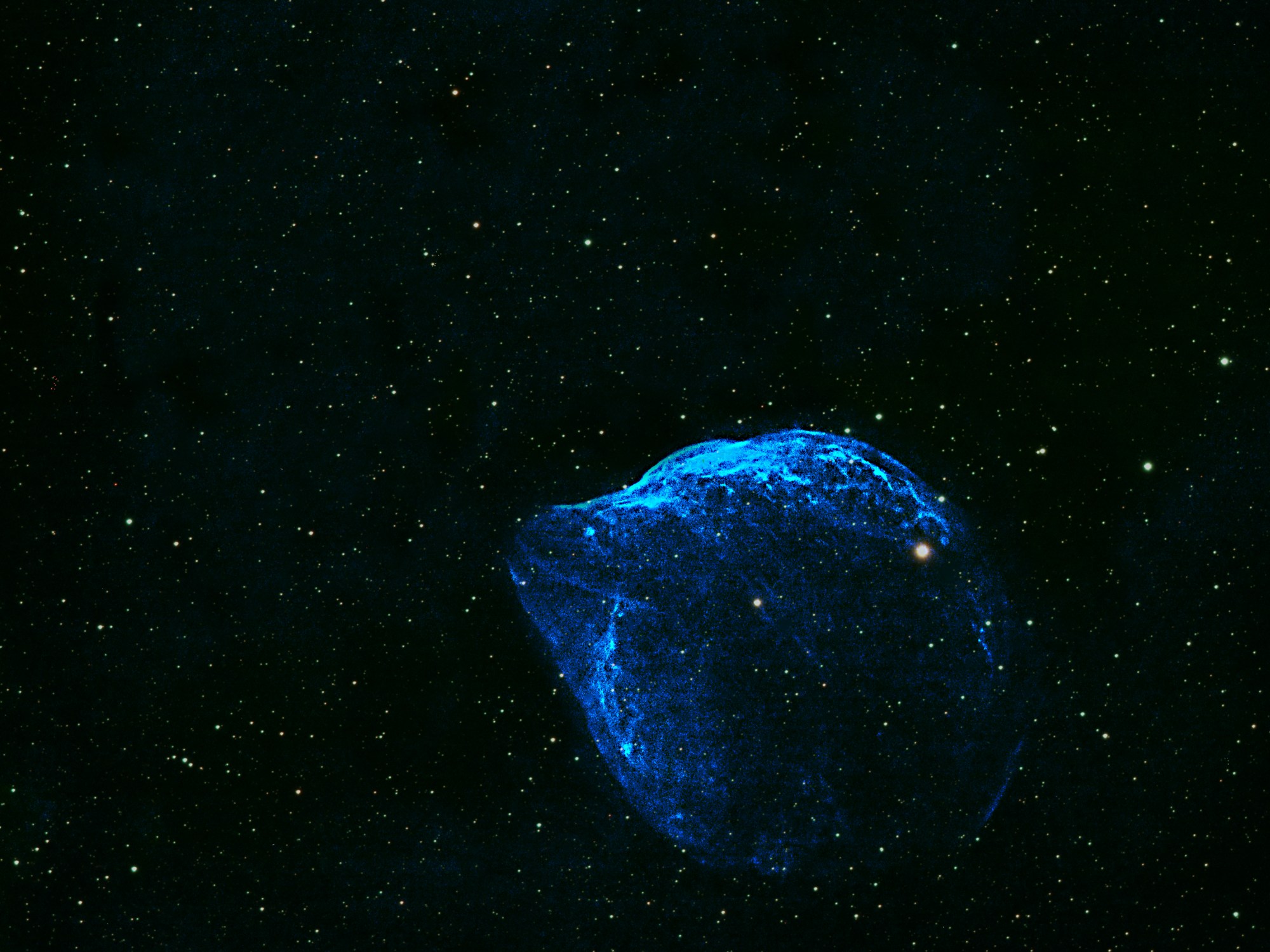
Gazing towards the constellation Canis Major, the Greater Dog, lies a cosmic plaything known as the Dolphin Head Nebula, designated SH2-308. This captivating nebula, aptly named for its resemblance to a dolphin’s head leaping through the celestial sea, holds a story of stellar winds, vibrant colors, and impending drama.
The Dolphin Head is an emission nebula, meaning its glow arises from the energetic radiation of a central star, in this case, the massive and turbulent Wolf-Rayet star EZ Canis Majoris. This star, nearing the end of its life, blasts powerful winds into the surrounding gas and dust. These winds, traveling at astonishing speeds of over 1,700 kilometers per second, essentially carve out a bubble-like cavity, shaping the nebula’s distinctive form.
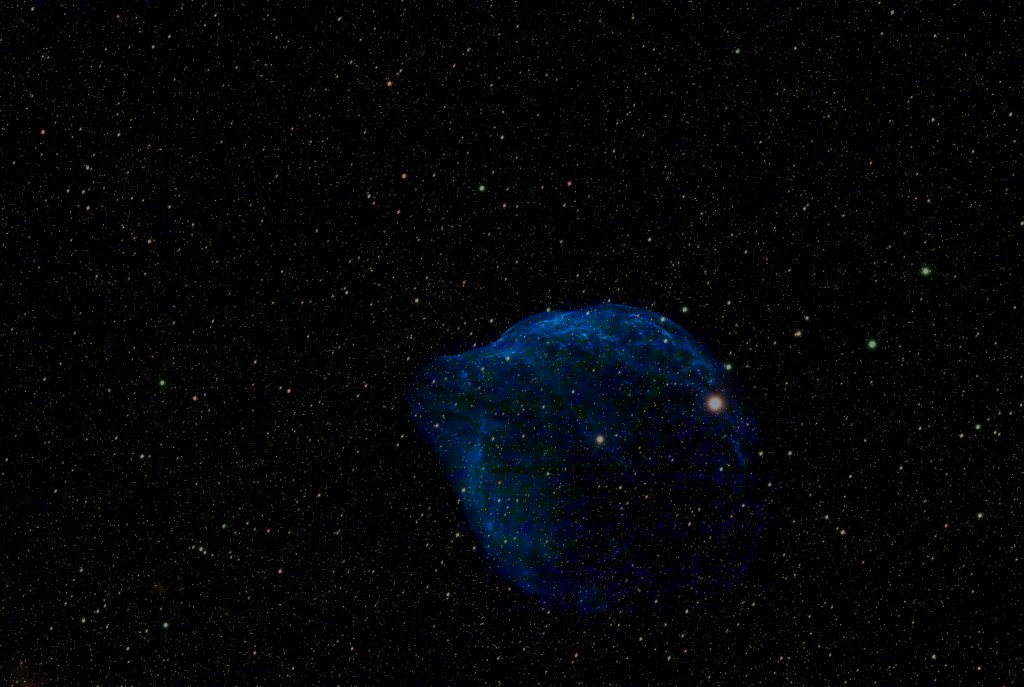
The above image was captured over several nights of imaging with various exposure lengths from 120 to 180 seconds. Autoguiding was through PHD2. This image is at 480mm focal length form an 80mm refractor telescope at f6. Imaging was through an SVBony 405cc color one shot cooled astro camera, cooled to -5°C with a gain of 110. Total integration time on this image is around 3 hours. I expect to want to collect at least another 10 hours of total data on this image before I am happy with the results. There is a lot more detail in this Nebula still not captured, and the image is still a little noisy and difficult to handle in processing.
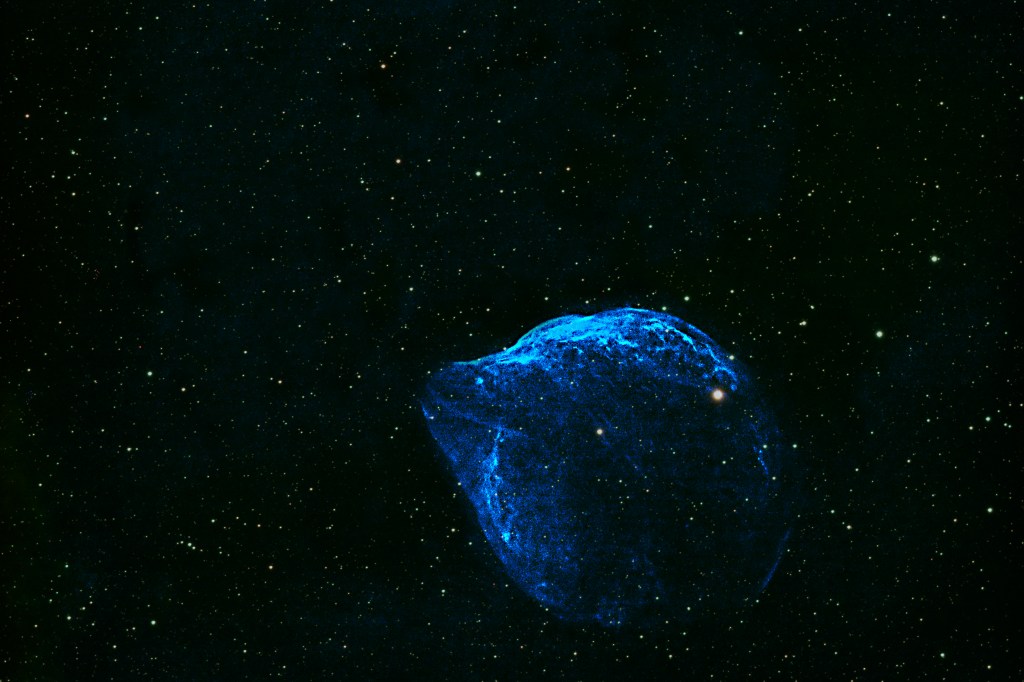
A further 3 hours of data was added to the above. This really highlights how integration time is really the king of astrophotography.
The below video details the process of editing and stacking the images. I used Pixinsight for the stacking procedure, and then a basic first stretch, and separation of the stars and nebula into two images. Then in photoshop I further stretch, edit and process before recombining the stars with the Nebula for the final image.
The hydrogen gas within the nebula, energized by the star’s radiation, emits captivating hues of red, orange, and blue, creating a stunning color palette against the backdrop of the starry night. However, the story doesn’t end there.
Nestled within the bubble is a dense cloud of dust that absorbs some of the emitted light, forming the dark silhouette of the dolphin’s head and neck. This interplay of light and shadow further accentuates the nebula’s intricate details.
Sadly, the Dolphin Head’s beauty masks a ticking clock. EZ Canis Majoris is in a brief, pre-supernova phase of its existence, meaning it’s nearing a catastrophic explosion. In the coming millennia, this star will erupt in a spectacular supernova, sending shockwaves rippling through the surrounding region and potentially triggering further star formation.
While the fate of the Dolphin Head remains uncertain, studying it allows astronomers to understand the complex relationship between stars, gas, and dust. It serves as a testament to the constant evolution and drama unfolding within the vast expanse of the universe.
Discover more from Nicks Astrophotography
Subscribe to get the latest posts sent to your email.
 Nicks Astrophotography