
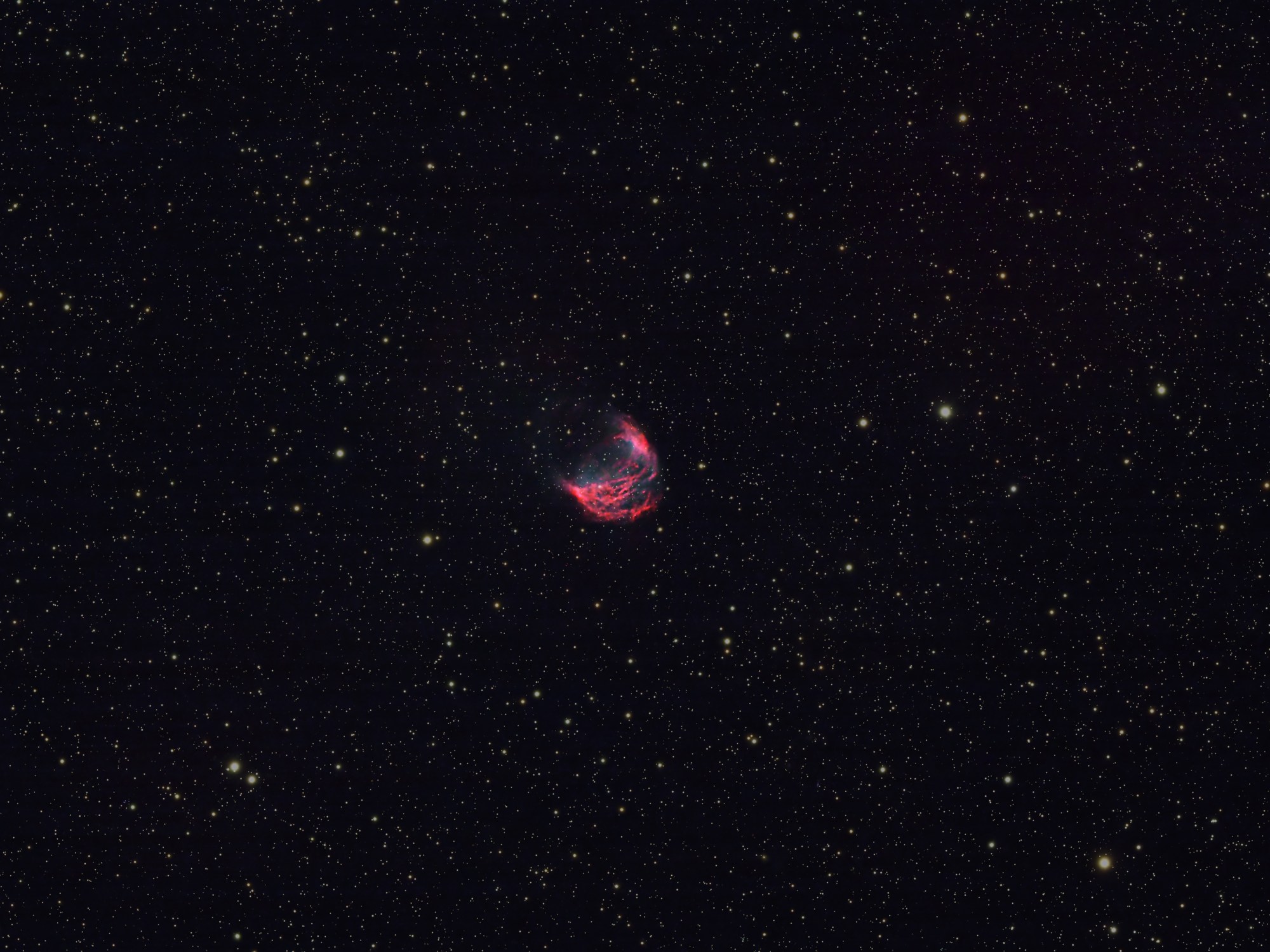
Gazing towards the constellation Perseus, one encounters the captivating Medusa Nebula, a celestial marvel named after the mythical Gorgon. This mesmerizing cloud of gas and dust boasts vibrant hues and intricate tendrils, earning its nickname due to its resemblance to the mythical creature’s snake-haired head.
The Medusa Nebula, technically classified as Sharpless Sh2-272, holds a complex structure composed of primarily hydrogen gas and dust. This material, energized by the intense radiation from nearby young stars, glows in vibrant shades of red, orange, and blue, painting a stunning celestial canvas.
Formed by the powerful winds and radiation from a young, massive star known as HD 27896, the Medusa Nebula is a reflection nebula. This means dust in the nebula reflects the starlight, creating the ethereal blue hues we observe. The star’s intense winds sculpt the dust into wispy filaments, resembling the writhing snakes in Medusa’s hair.
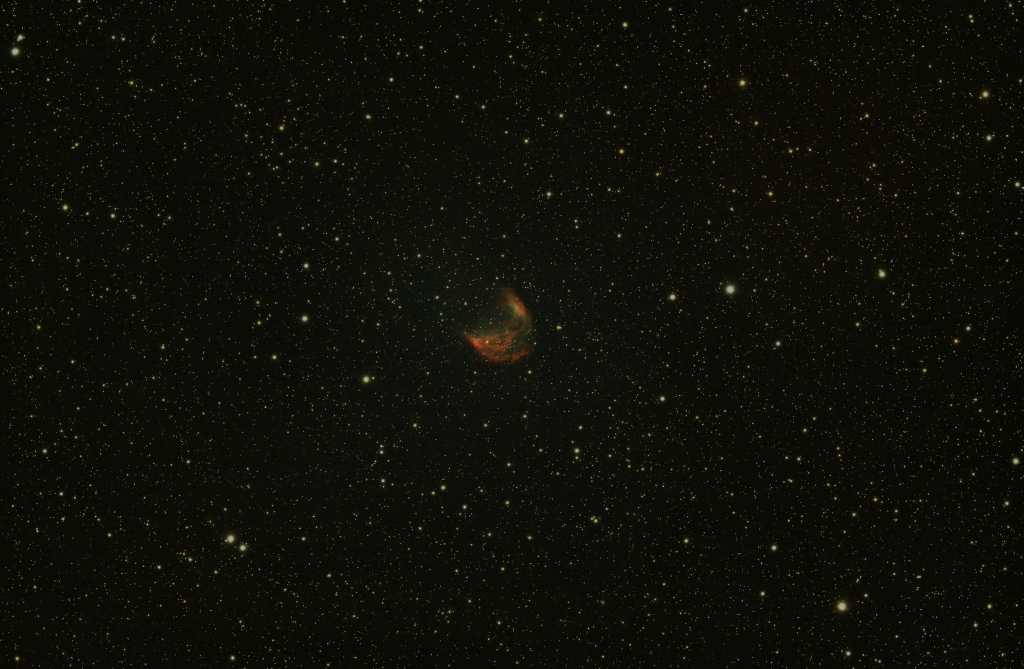
The above image was captured with 300 second exposures over 4 hours. It is a faint Nebula, and low in the sky when I was shooting this. Another 3-6 hours would really bring out more details and help brighten the colors in this image. A target to revisit for sure, and would be even better with a more powerful scope than my 480mm focal length. This target is very faint and will require many more hours to get the real beauty off the Nebulosity to show through.

The RGB data was proving difficult to work with. The Nebula was not contrasting well against the background. I switched to imaging with a dual band filter, and it has resulted in a greatly improved image. The above is a combination of the RGB stars and the dual band data for the Nebula of around 3 hours.
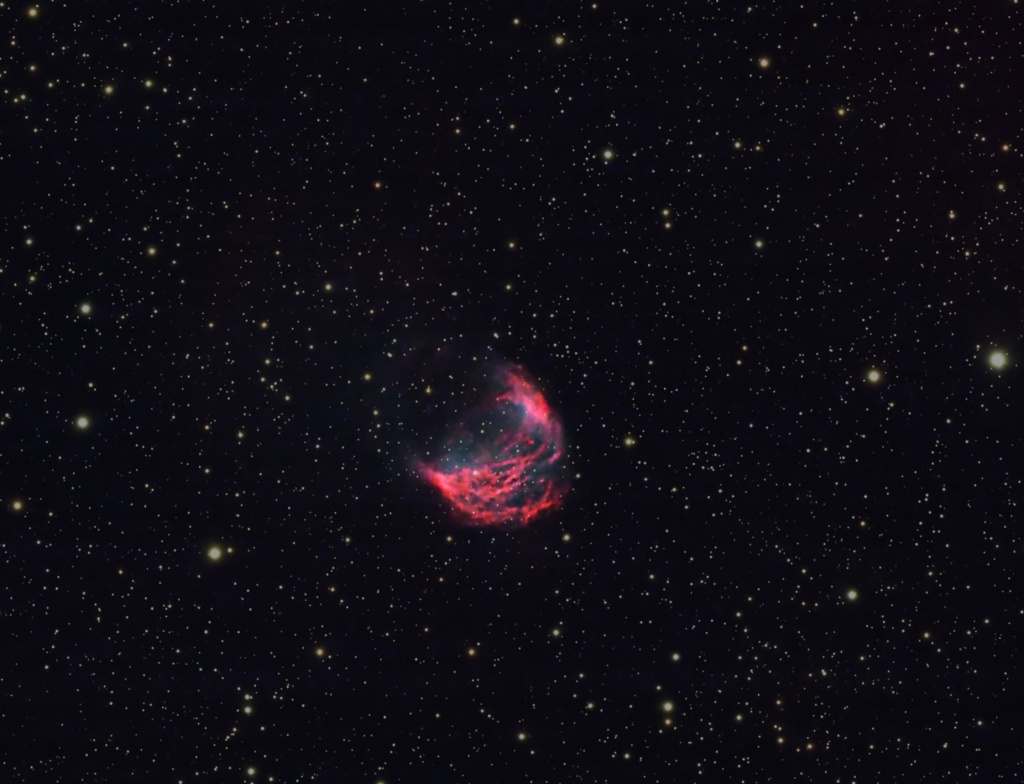
The Medusa Nebula isn’t just a captivating spectacle; it’s a nursery for new stars. Embedded within its dusty tendrils lie clumps of denser material, where gravity pulls gas and dust together, triggering the birth of new celestial bodies.
Studying the Medusa Nebula allows astronomers to delve deeper into the complex processes of star birth and evolution. By observing the interaction between gas, dust, and young stars, they can gain valuable insights into the early stages of stellar development and the intricate dance between creation and destruction within the vast expanse of space.
So, the next time you gaze towards the constellation Perseus, take a moment to seek out the Medusa Nebula. This celestial marvel, with its captivating beauty and ongoing celestial drama, serves as a reminder of the dynamic and ever-evolving nature of our universe.
Discover more from Nicks Astrophotography
Subscribe to get the latest posts sent to your email.
 Nicks Astrophotography