
The vast expanse of space holds countless galaxies, each a swirling cosmos in its own right. Among them lies NGC 4535, a captivating object nicknamed the “Lost Galaxy” by an amateur astronomer.
Nicknamed by Leland S. Copeland in the 1950s, NGC 4535 appears faint and hazy when viewed through smaller telescopes. This ghostly appearance earned it the moniker “Lost.” However, don’t be fooled by its elusive nickname. NGC 4535 is a magnificent barred spiral galaxy, much like our own Milky Way, residing roughly 50 million light-years away in the Virgo constellation.
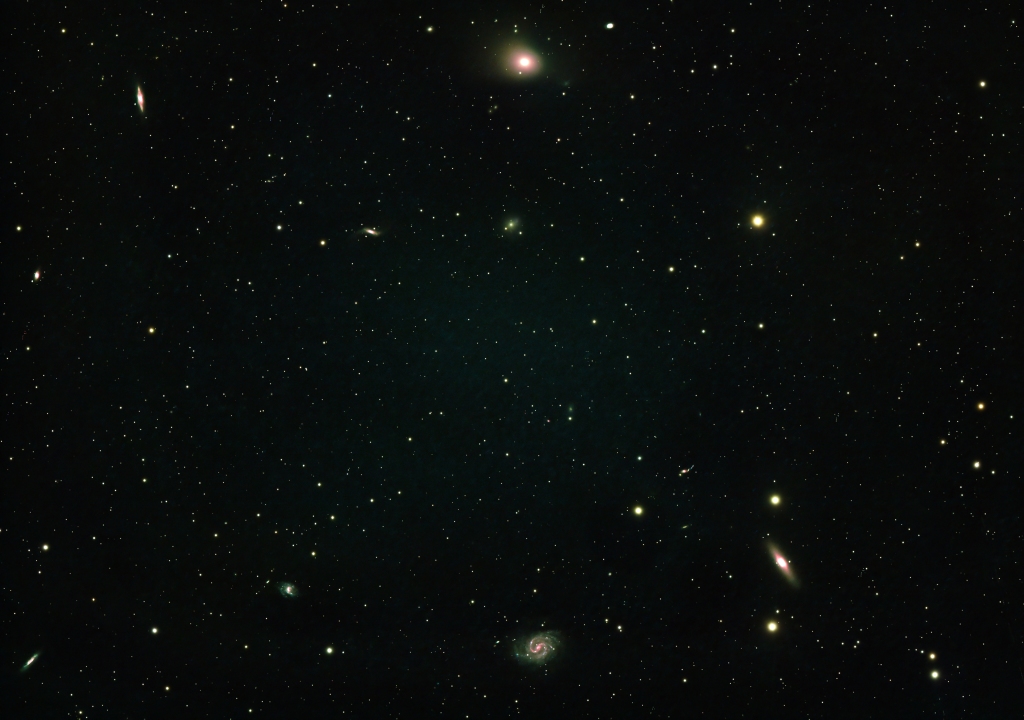
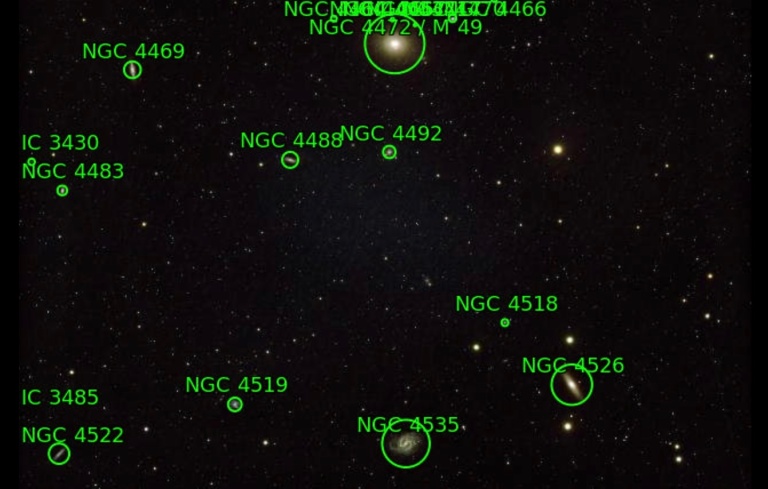
This image captured at 460mm focal length with an 80mm aperture triplet refractor telescope shows some of the details of the galaxy, including its neighboring deep space objects. Several other galaxies can clearly be seen within the frame. The Lost Galaxy of Copeland is the barred spiral galaxy at the bottom of the image. at least 8 other galaxies can be resolved from this image, if not more. utilizing plate solving websites can reveal the identities of the surrounding objects.
The true beauty of NGC 4535 unfolds when viewed through powerful telescopes like the Hubble Space Telescope. These instruments reveal a vibrant tapestry of colors, a testament to the galaxy’s stellar population. The bright blues and yellows indicate the presence of young, hot stars, while the reddish hues hint at the presence of dust clouds where new stars are born.
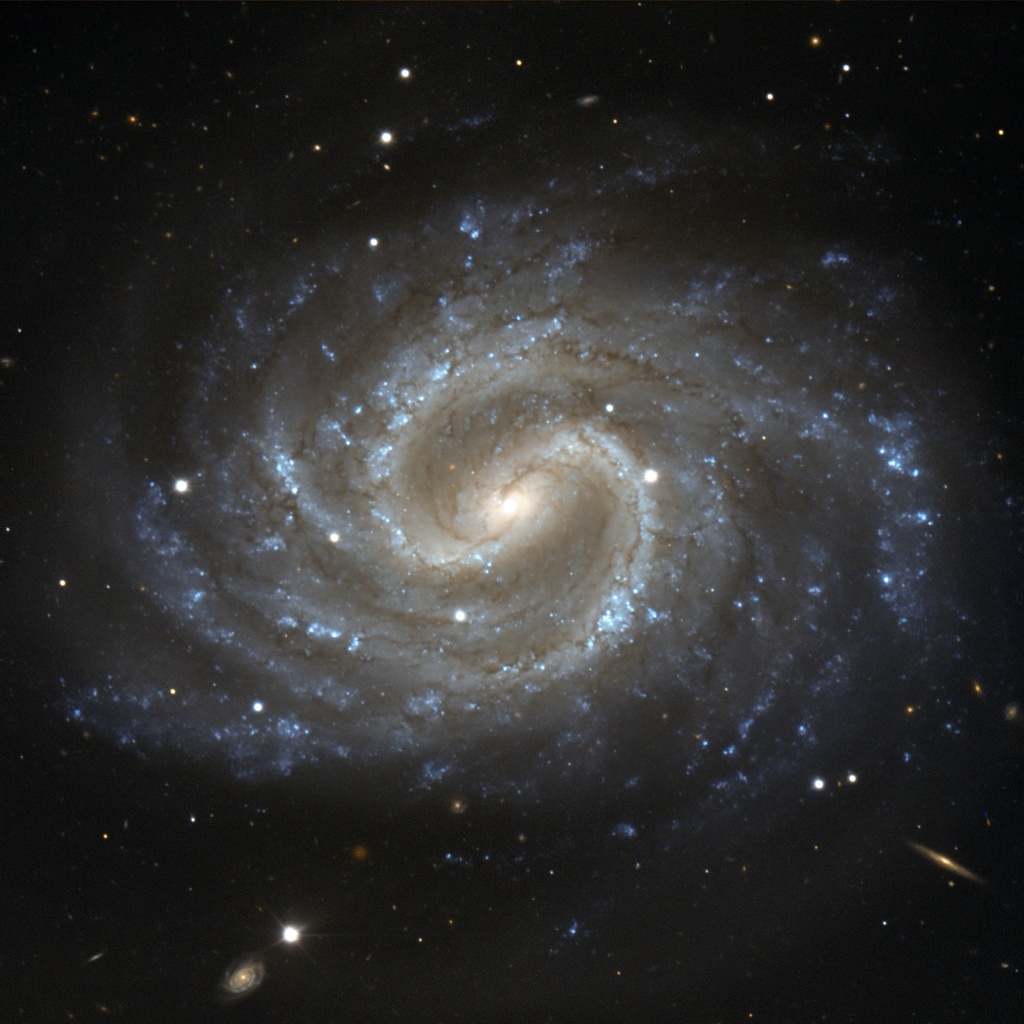
NGC 4535 isn’t truly lost; it’s simply a victim of perspective. Smaller telescopes struggle to capture its full glory, revealing only a faint smudge of light. However, with advanced technology, astronomers can unveil its true nature – a majestic island of stars, gas, and dust swirling in the depths of space.
The “Lost Galaxy” serves as a reminder that astronomical discoveries often depend on our tools and techniques. What appears faint and elusive through one lens can be transformed into a breathtaking spectacle with another. NGC 4535 is a testament to the wonders that lie hidden within the universe, waiting to be unraveled by our ever-evolving gaze.
Discover more from Nicks Astrophotography
Subscribe to get the latest posts sent to your email.
 Nicks Astrophotography