
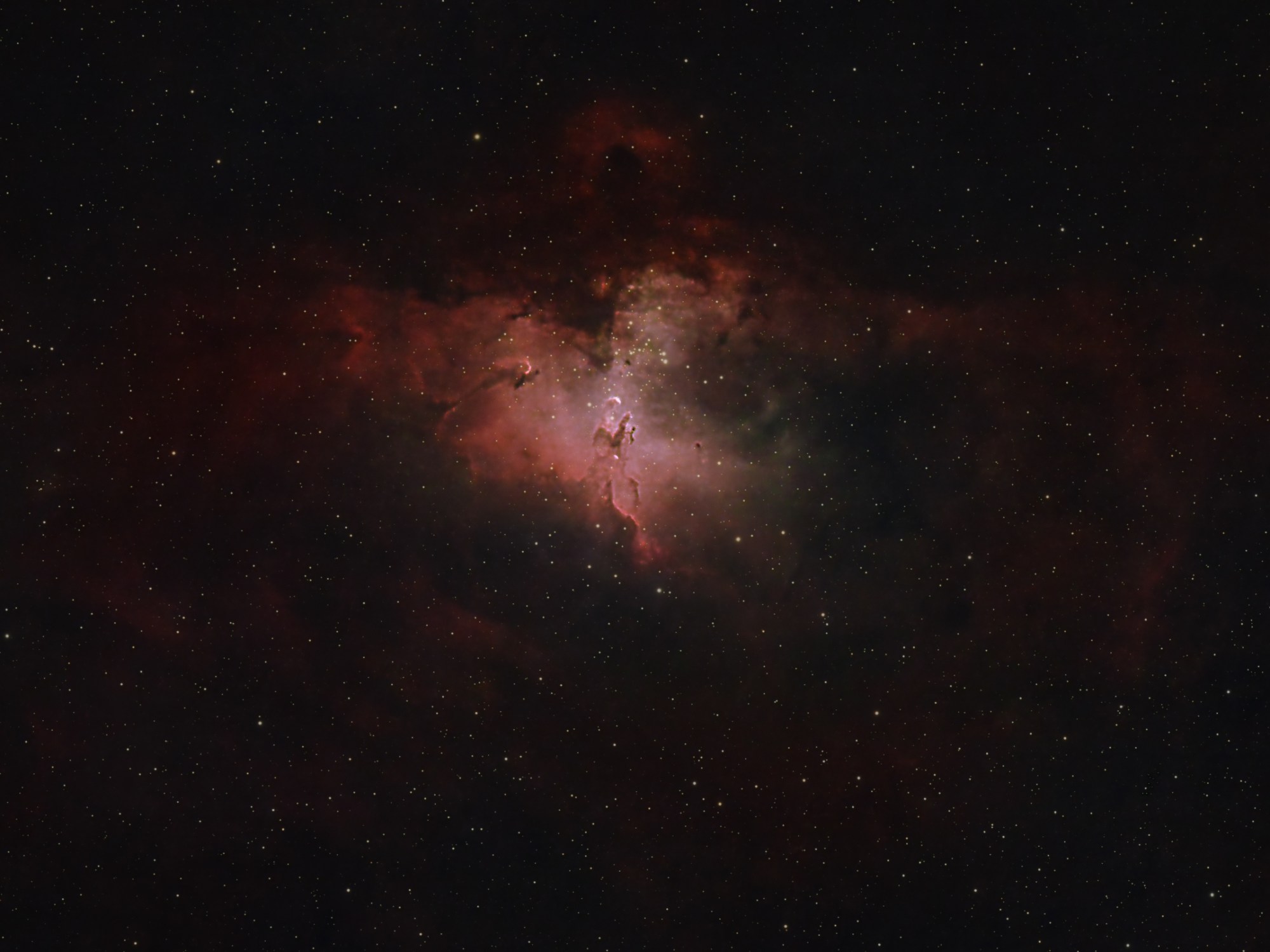
The Eagle Nebula, located roughly 7,000 light-years away in the constellation Serpens. It is one of the most striking star-forming regions in the Milky Way galaxy. This nebula, also known as Messier 16 (M16), is part of a larger region of active star formation. This is called the Serpens OB1 Association. In this region, new stars are constantly born from massive clouds of gas and dust.
The Eagle Nebula is home to the “Pillars of Creation.” These iconic structures are towering columns of gas and dust. These pillars were captured in breathtaking detail by the Hubble Space Telescope in 1995. They are massive structures, with some stretching over five light-years in length. They resemble large cosmic fingers reaching into space. The pillars are primarily made of hydrogen gas and dust. Intense radiation and stellar winds from nearby newly formed massive stars have sculpted them over time.
Within these columns, dense pockets of gas act as stellar nurseries, condensing under gravity to form new stars. As these young stars ignite, their radiation carves away the surrounding material. This process slowly reveals them and further shapes the pillars’ intricate contours. Recent infrared images of the Pillars of Creation reveal even more detail. They allow scientists to peer through the dust. Scientists can observe nascent stars in various stages of formation.
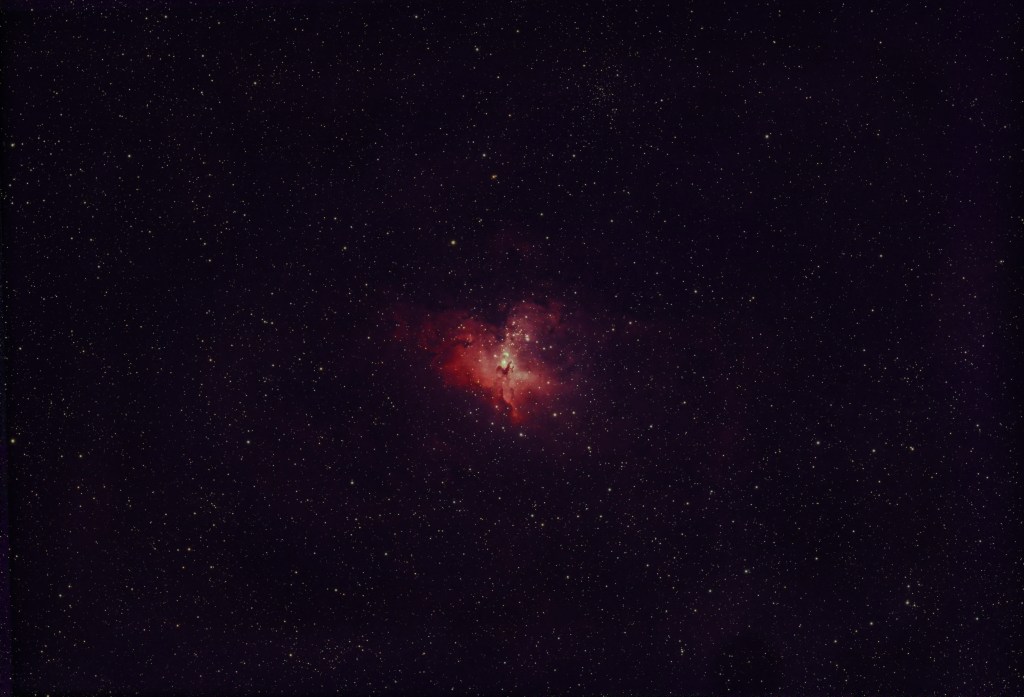
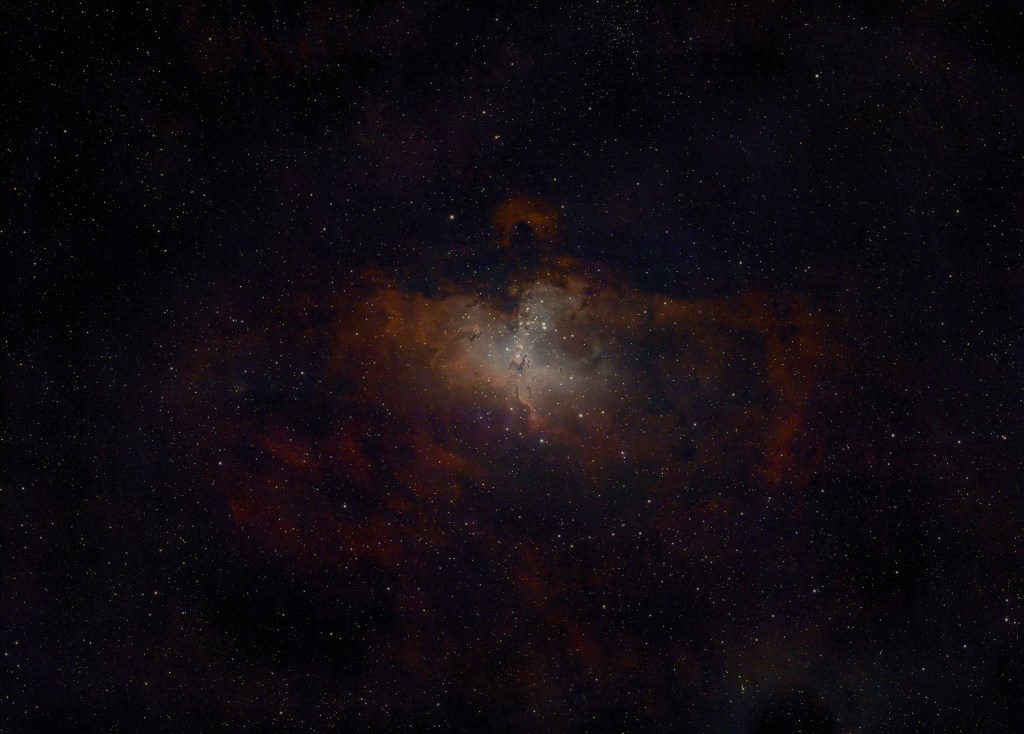
The below image was captured over 2 hours with 60 second exposures. An SVBony One Shot Color (OSC) camera was used cooled to 5°C. Guiding on a ZWO AM5 mount. The pills can just be made out in the center below the bright star at the center of the Nebula.
With additional hours the details are starting to now become visible. I increased exposure time to 90 seconds. An additional 90 minutes of 90 second exposures, combined with the 2 hours of 60 second exposures.
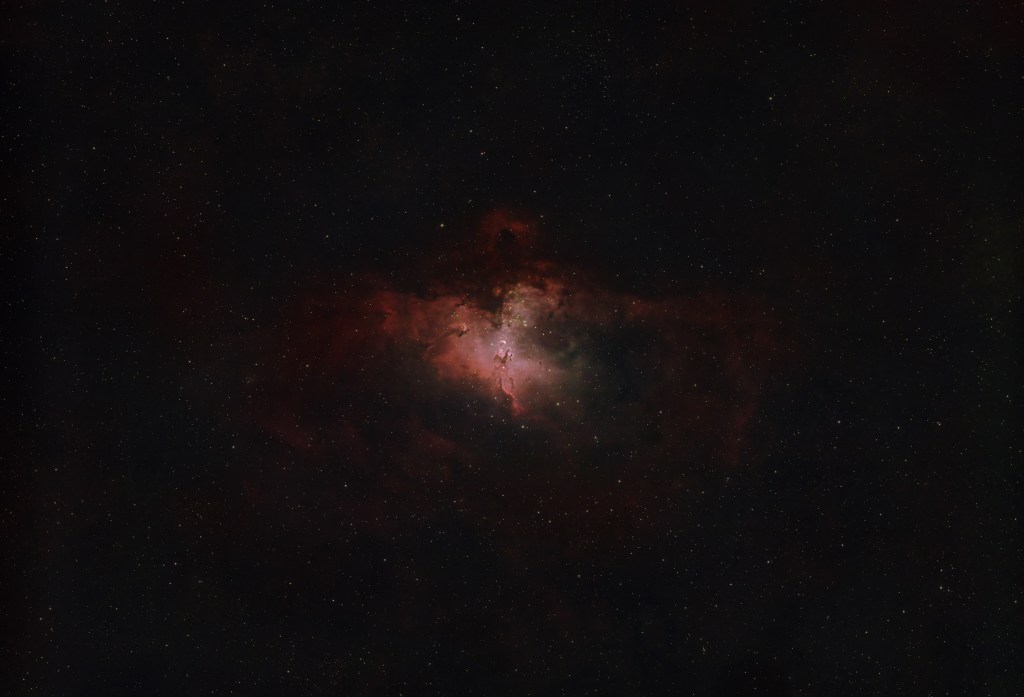
Below is a cropped closer view of the core and the pillars of creation.
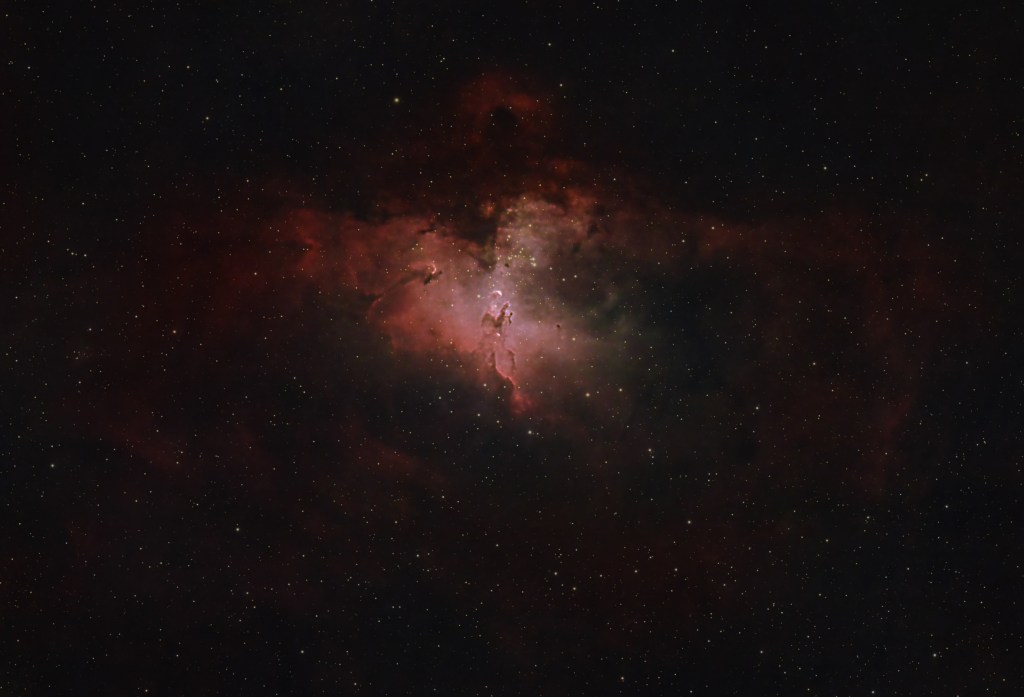
The below image is another 1 hour of extra data bringing total to around 4 hours of integration time.
The Pillars of Creation offer astronomers a real-time look at the early stages of star formation. They also reveal the dynamic processes that shape galaxies. They serve as a reminder of the ongoing cycles of destruction and creation in our universe. Stars are continually born out of remnants from earlier generations. Observing these structures offers insight into the origins of stars. They also give insight into the origins of planetary systems. These observations hint at the conditions that might lead to life in the cosmos.
Discover more from Nicks Astrophotography
Subscribe to get the latest posts sent to your email.
 Nicks Astrophotography