
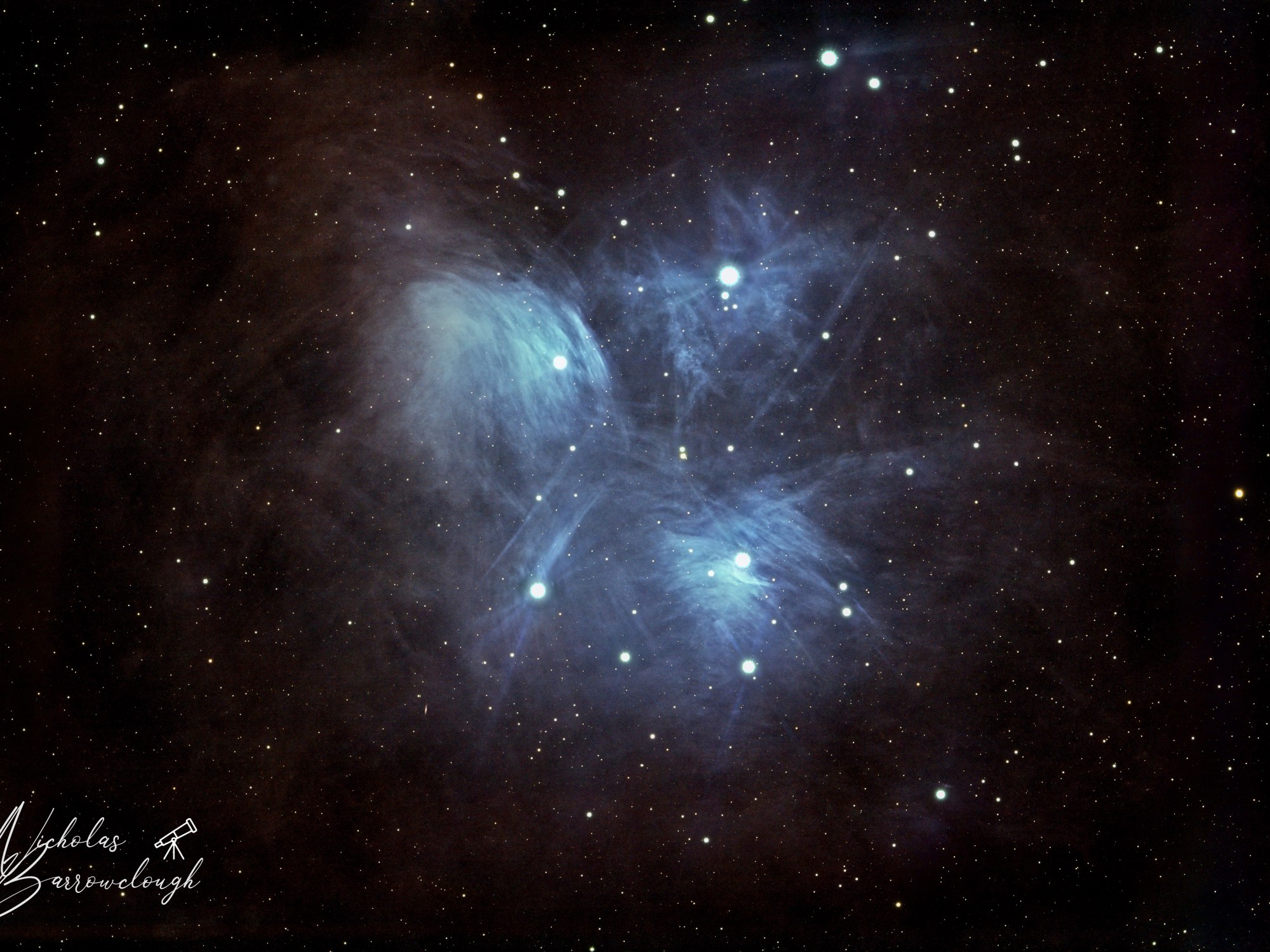
Last year, I started Astrophotography and imaged the Pleiades. It was one of the first deep sky objects I captured. I captured over 4 hours of data and was quite pleased with the results.
The image below was what I captured with the the data in January of 2024. Looking back on it now I can see it is a little over saturated and processed. As my processing skills have improved, I decided to revisit this target.
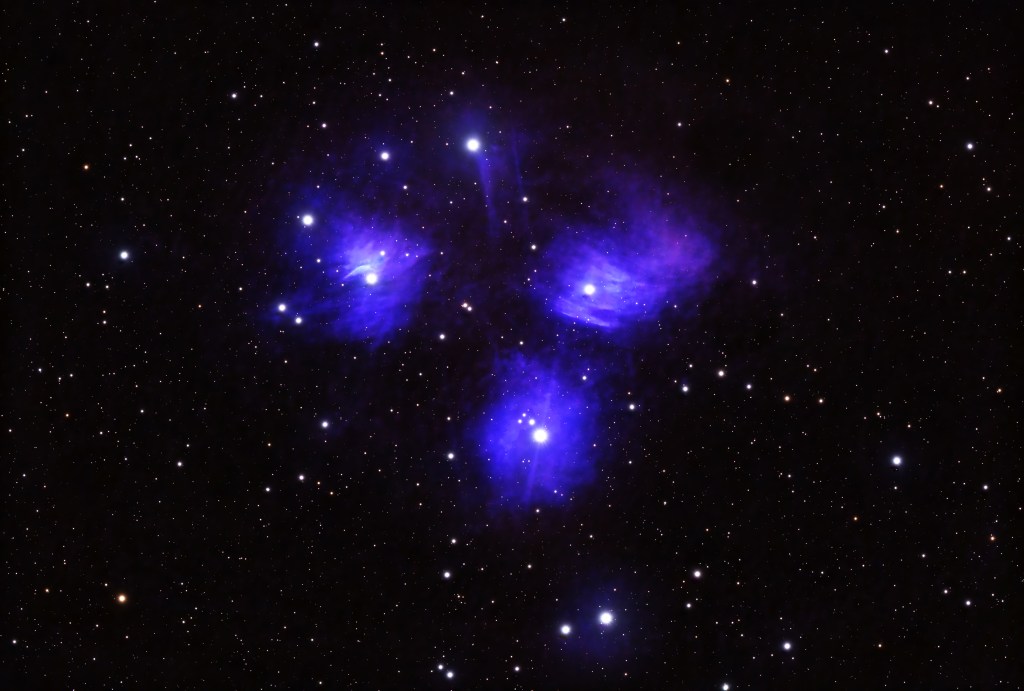
The next image was captured November 2024 with only 1.8 hours of exposure
12x 120 second exposure
57x 90 second exposure
Same scope, camera, focal length, and using the UV IR Cut filter.
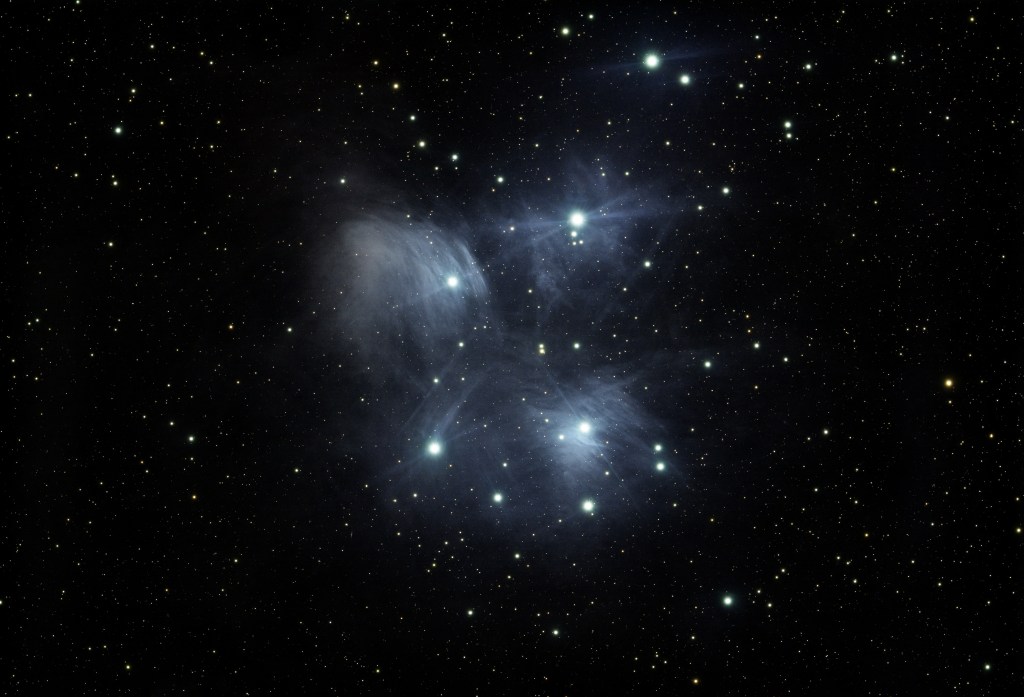
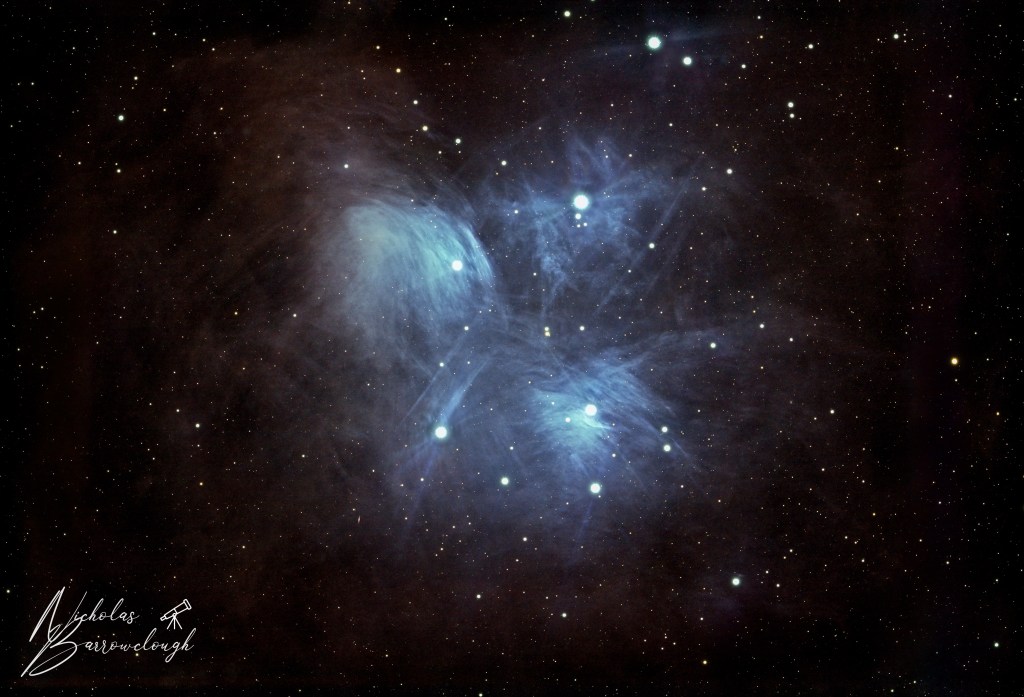
This is proof that it is not all down to the amount of data you collect, but quality of processing. I used Pixinsight for stacking and a first stretch in this image. I also separated the star from the background layer. Then in Photoshop the remaining processing was completed, as well as generating a luminance layer from the RGB data. it is much less over saturated, the stars have better color, and the details are much more subtle.
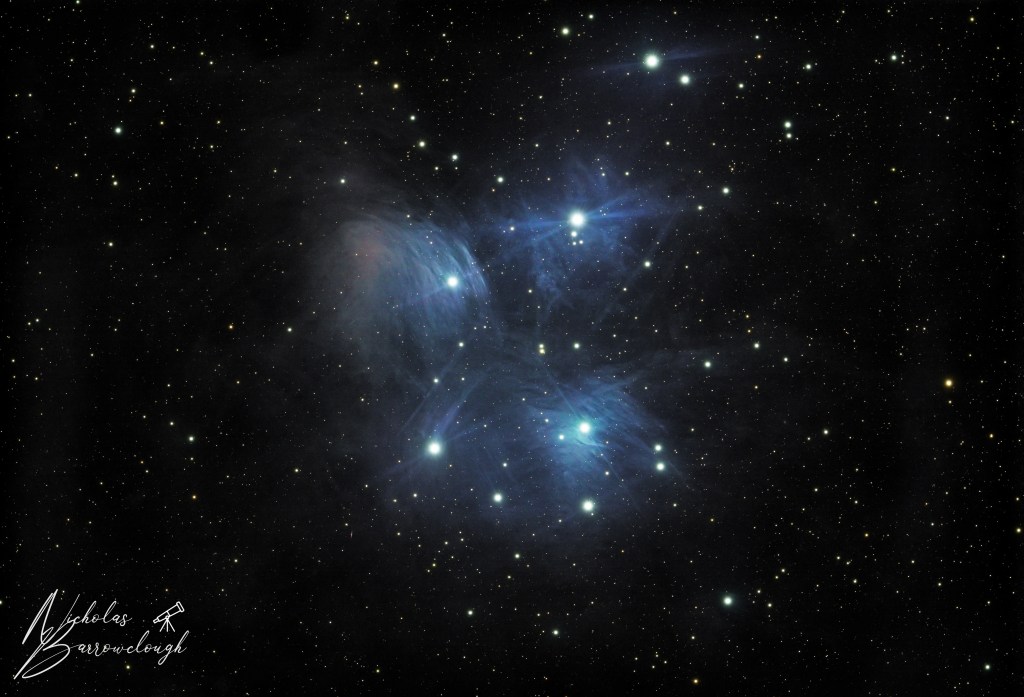
Here’s the final image. A few more subtle edits enhance the details. They also add color interest to the features.
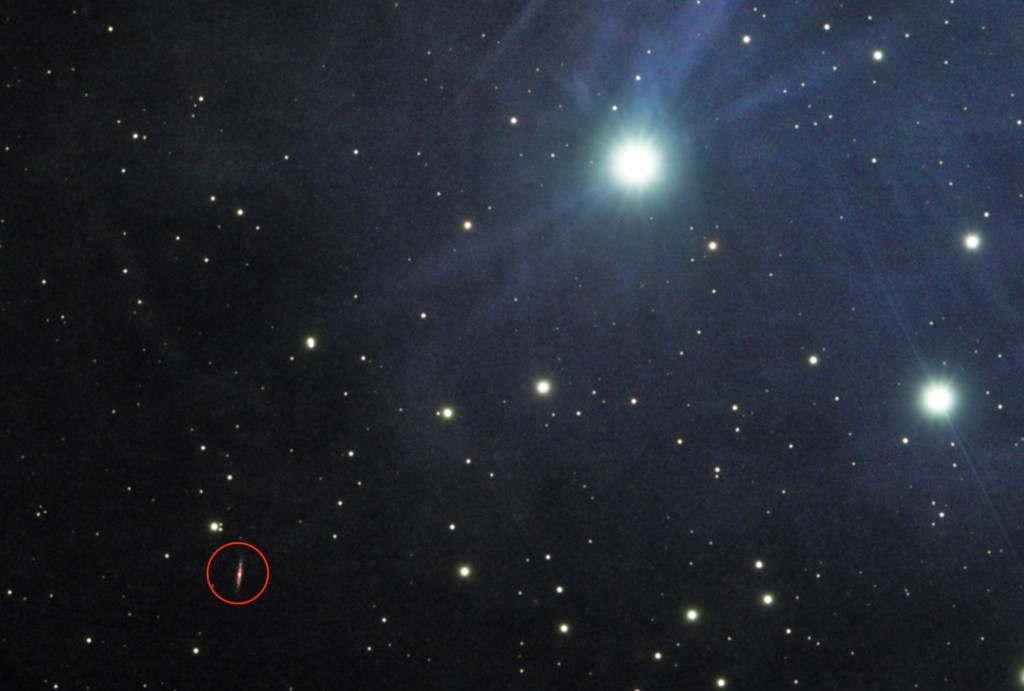
Another thing to notice is that on this image I managed to bring out the details of UGC 2838. This distant galaxy can be just made out near the star Electra (17 Tau).
This galaxy is a spiral galaxy in the constellation of Taurus, at a distance of 316,100,977 Light Years from Earth.
With this, you can now definitely see more details in the surrounding Nebula. This is compared to the shorter exposures of the above images.
Discover more from Nicks Astrophotography
Subscribe to get the latest posts sent to your email.
 Nicks Astrophotography