

The cosmos is filled with breathtaking wonders, and the Seagull Nebula is no exception. Nestled on the border between the constellations Monoceros (the Unicorn) and Canis Major (the Greater Dog), this celestial object lives up to its name with its uncanny resemblance to a seagull in flight.
This is my updated image of the Seagull Nebula. I started to collect data on this target at the PAS Milkyway Camp in Tanay, Rizal. This is a further 2 nights of data added.
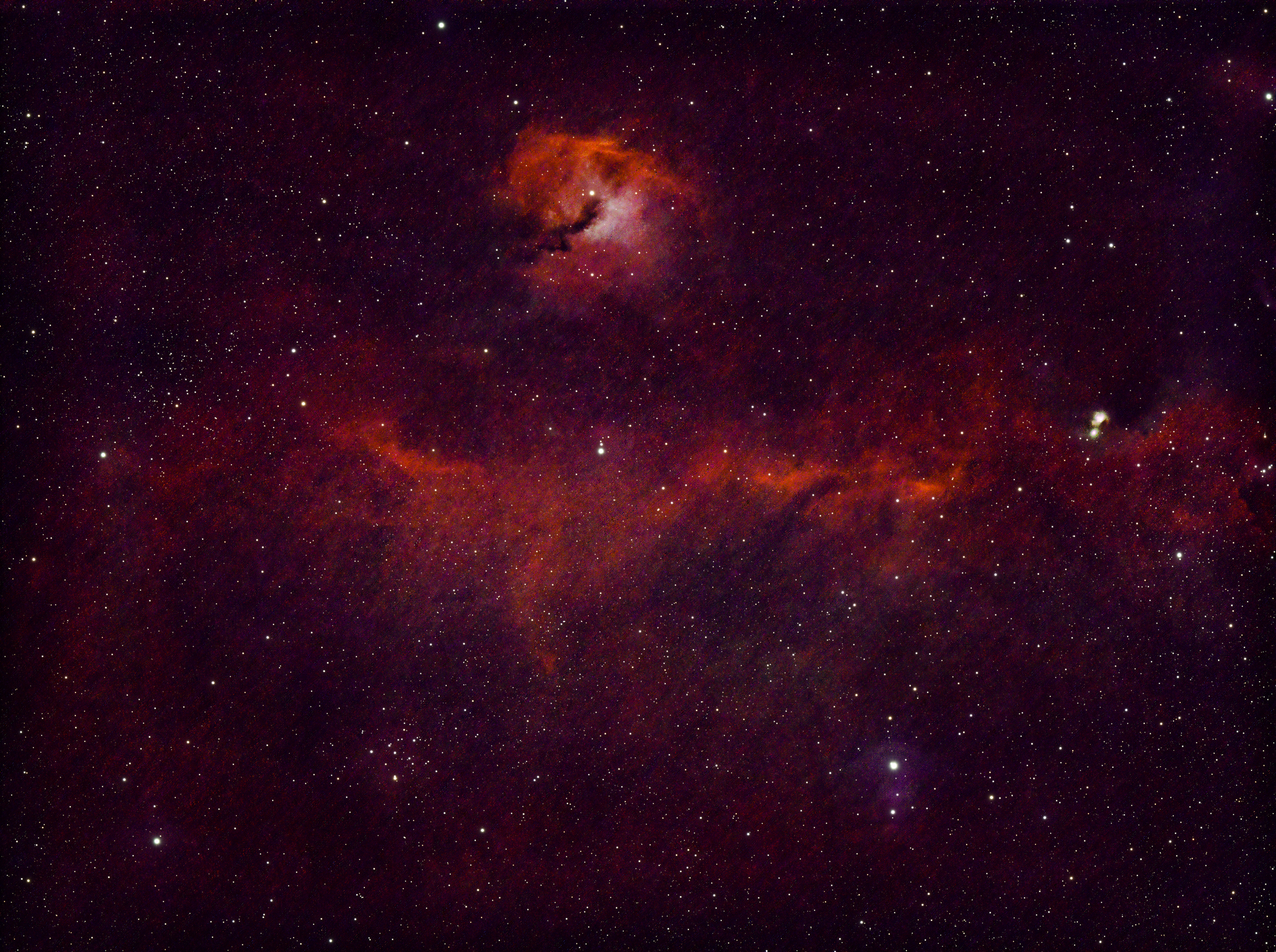
But the Seagull Nebula, also known as IC 2177, is more than just a pretty picture. It’s a vast region of glowing gas and dust, roughly seven times the size of a full Moon, where stars are born. The nebula’s wings, formed by an ionized hydrogen region called Sharpless 2-296, span a staggering 100 light-years.
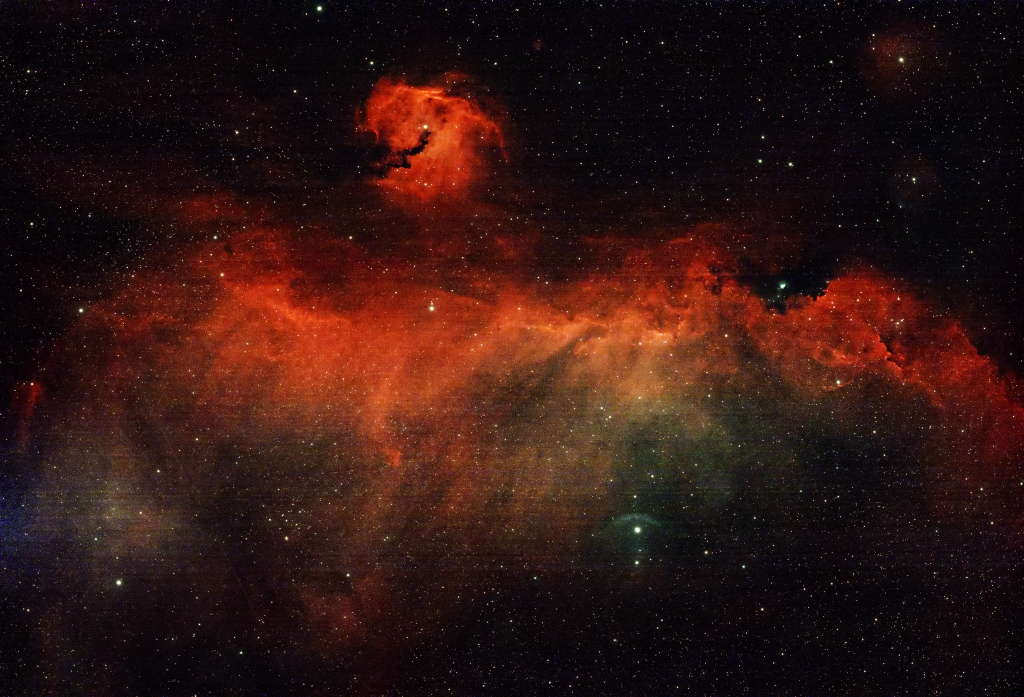
The above image is captured with a dual band filter and the SVBony 405cc one shot color camera. Same camera and scope as the first image, but with a dual pass filter that allows only the Ha and OIII bands to pass through. You can see the greatly improved contrast and colors coming through in this image compared to the RGB image I first captured. This is 3 hours of dual band data. I would like to continue to add to this, getting up to 6+ hours, and then I will combine it with the RGB data and the RGB stars.
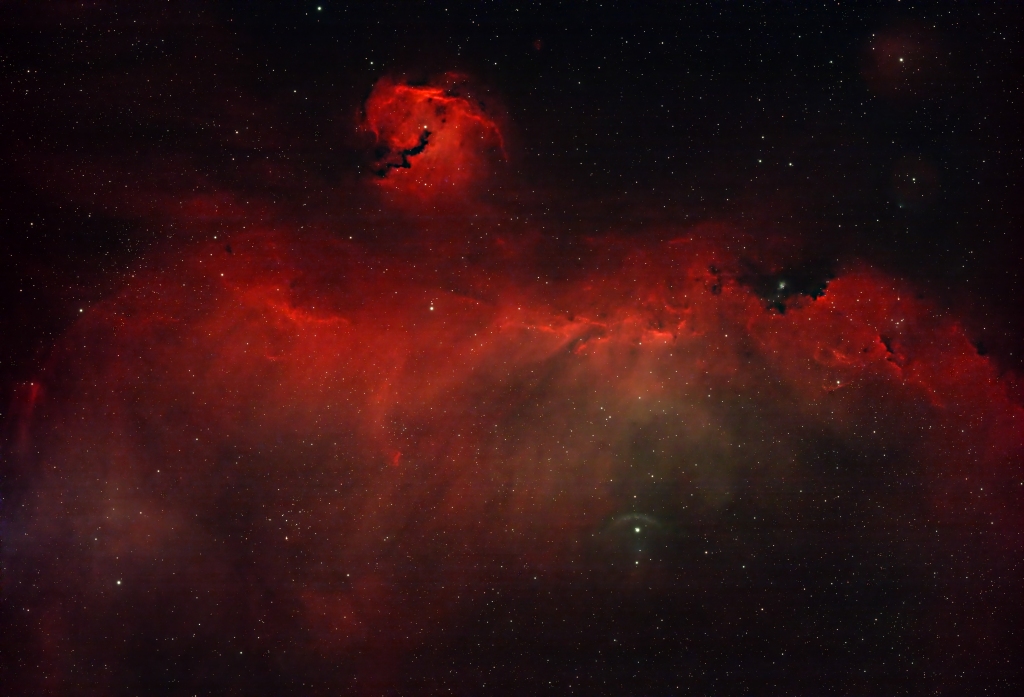
Here’s an additional 1 hour of data, you can see that this 1 additional hour made a huge difference. The image does reach a point where there are diminishing returns, the image is starting to reach that point. Another 1 or 2 hours would be bring out a little more details, and help slightly with the banding, and the addition of RGB data for the stars would be beneficial.
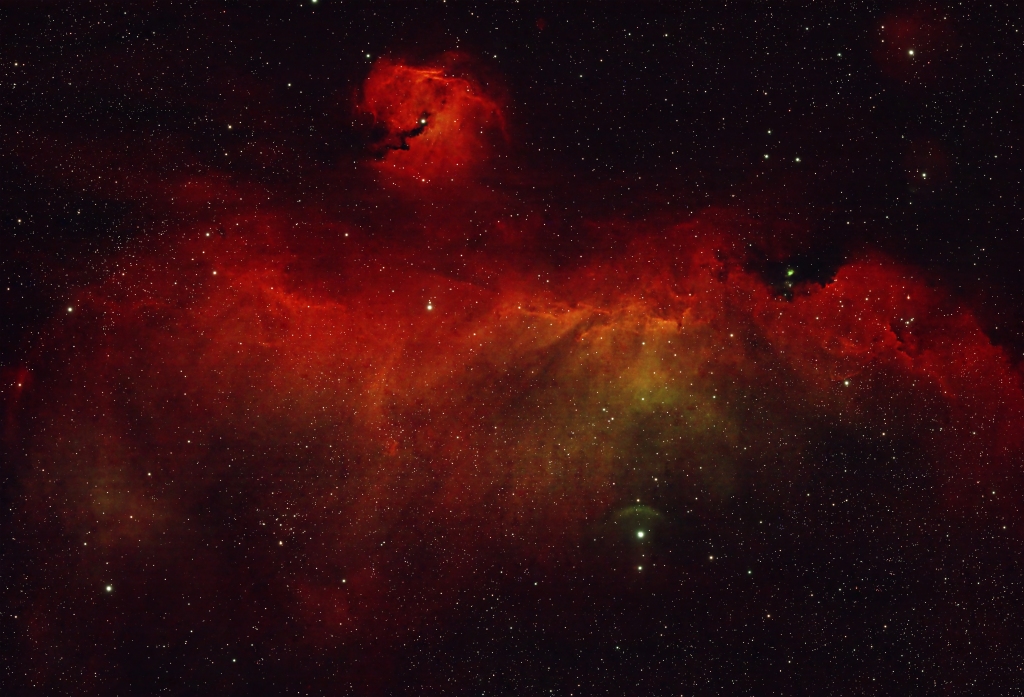
Here’s a further 2 hours of data, plus RGB for the stars.
The energetic light from young, massive stars within the nebula excites the surrounding hydrogen gas, causing it to emit a characteristic red glow. Dark dust lanes snake through this vibrant gas, creating a dramatic contrast and adding to the illusion of a seagull’s body.
Interestingly, the Seagull Nebula’s origin story might involve a trio of exploding stars! Recent studies suggest it could be part of a shell leftover from three colossal supernovae. This theory adds another layer of intrigue to this cosmic spectacle.
While the Seagull Nebula itself might be faint and require a telescope for detailed observation, its location near the bright star Sirius makes it a good starting point for amateur astronomers. With a little patience and the right equipment, you too can witness this celestial seagull soaring through the vast expanse of space.
Discover more from Nicks Astrophotography
Subscribe to get the latest posts sent to your email.
 Nicks Astrophotography