

The California Nebula, a breathtaking emission nebula in the constellation Perseus, holds a special place for stargazers. Its resemblance to the outline of the US state of California, particularly in long-exposure astrophotography, has earned it its affectionate nickname.
Located roughly 1,000 light-years from Earth, the California Nebula is a vast region of glowing gas and dust stretching nearly 2.5 degrees across the night sky. This expansive size, while impressive, makes it quite faint and challenging to observe visually, especially for casual skywatchers.
The California Nebula’s vibrant colors are a testament to its energetic nature. Hot, young stars like Xi Persei bathe the surrounding gas in ultraviolet light, causing the hydrogen atoms to fluoresce and emit a reddish glow. This process of light excitation is what creates the nebula’s characteristic emission.
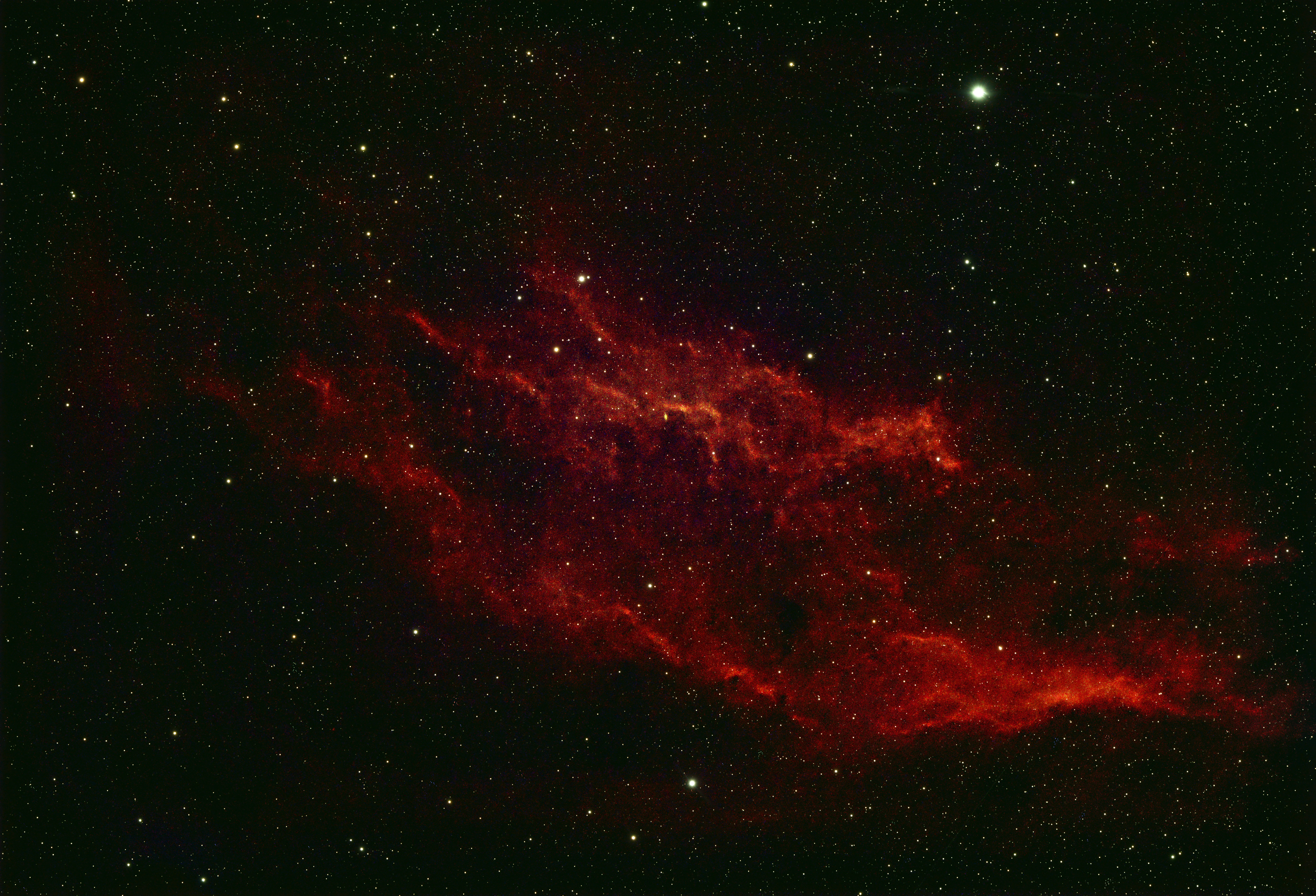
This image is only 2 hours worth of data, with my vantage point it is often blocked by the edge of my house. However coming into April it is now in a position where I can capture it but only for 1-2 hours maximum before it disappears behind a mountain. This means not only I am capturing short periods but low quality data as it’s low in the sky.
180 second exposure at 110 Gain on an SVBony 405cc one shot color astro camera cooled to 5°C. The California Nebula is quite large and I cannot fit it all into frame with my 80mm aperture, 450mm focal length. Perhaps I will continue to capture more data on this and create a mosaic image joining two images together to create one tapestry of the Nebula.
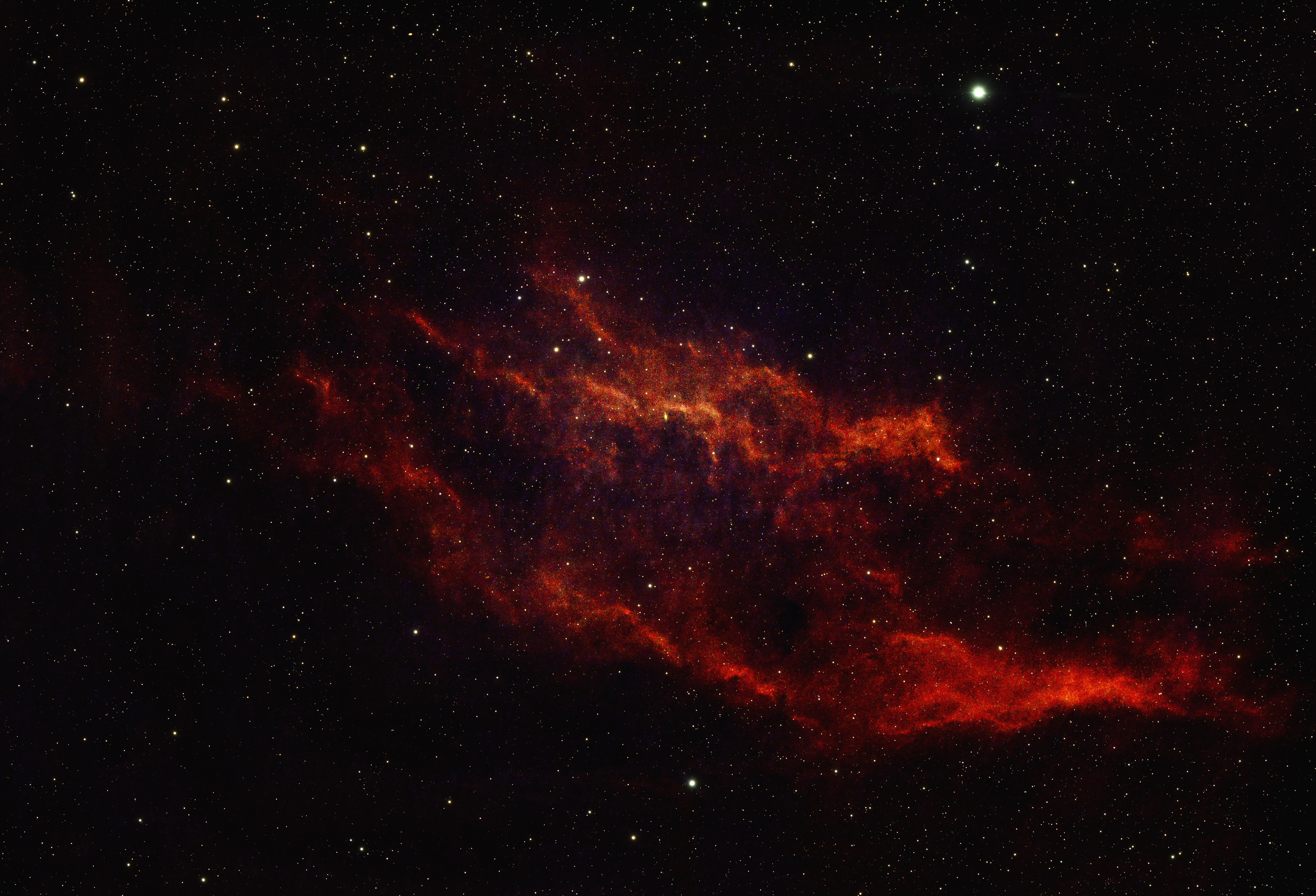
A further 30 minutes of data has been added in the above image.
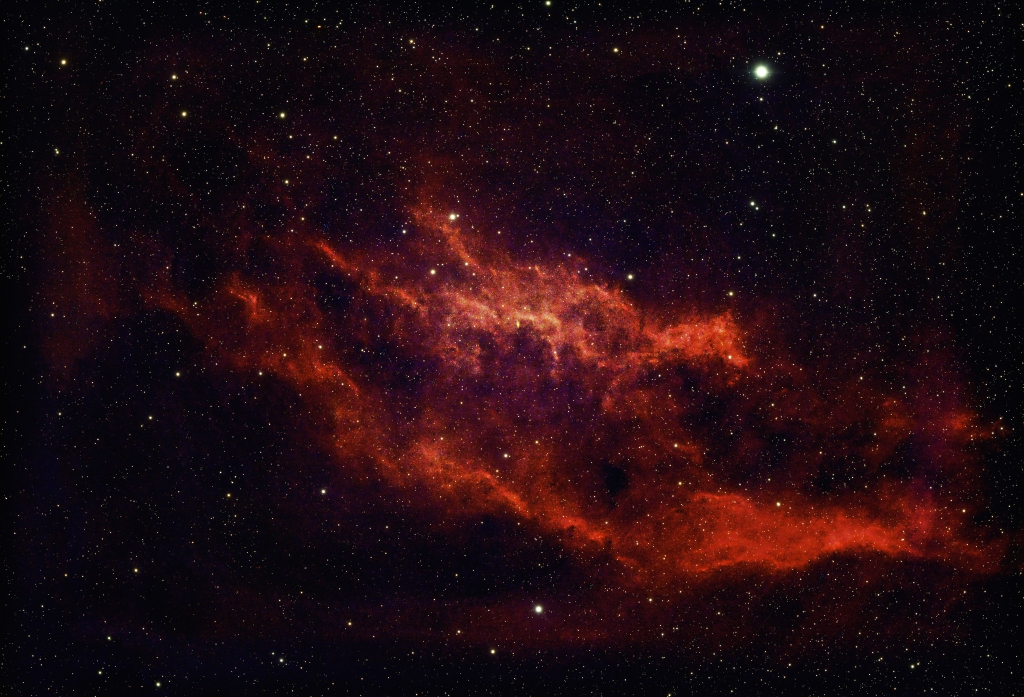
Here is another 1 hour of data added to the image, some of the details in the fainter areas are now starting to show through. I am thinking to continue to add, perhaps another 1-2 hours of RGB data, and then possibly several hours with a dual pass filter to help isolate and increase contrast of the nebulosity.
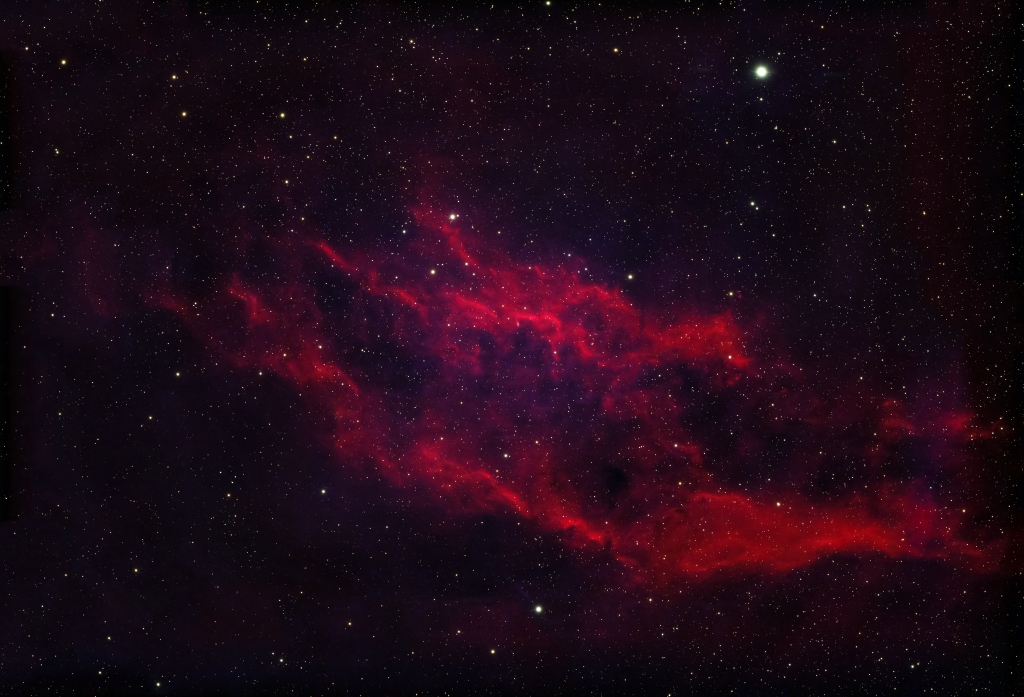
Another 1 hour of data, there is becoming less noise in the image, but seems not much additional detail is being brought out. I think this is enough RGB data on this target, I will now aim to collect some dual band data with longer exposures and reveal more of the details.
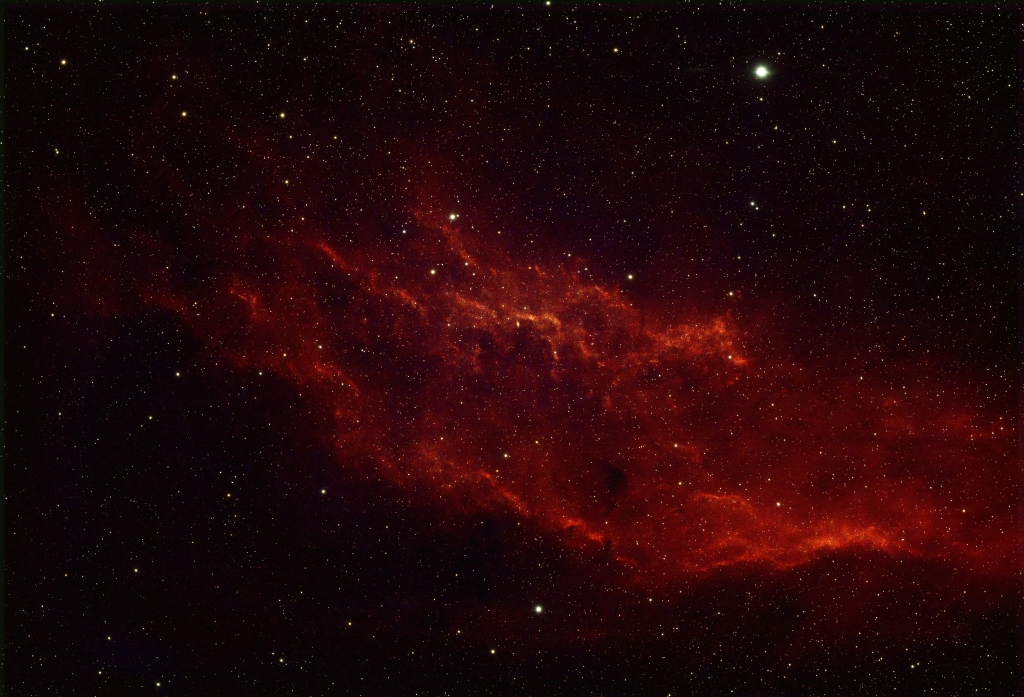
As this is a primarily Hydrogen Alpha Nebula, it is an ideal narrowband target. As I only use a one shot color camera at the moment, I therefore used a dual pass Ha and OIII filter to capture some dual band data which was combined with the RGB data to produce the above image. You can begin to now make out some of the outer dust and gas clouds which were too faint to see with the wide spectrum image. I will continue to gather more dual band data and add to this image.
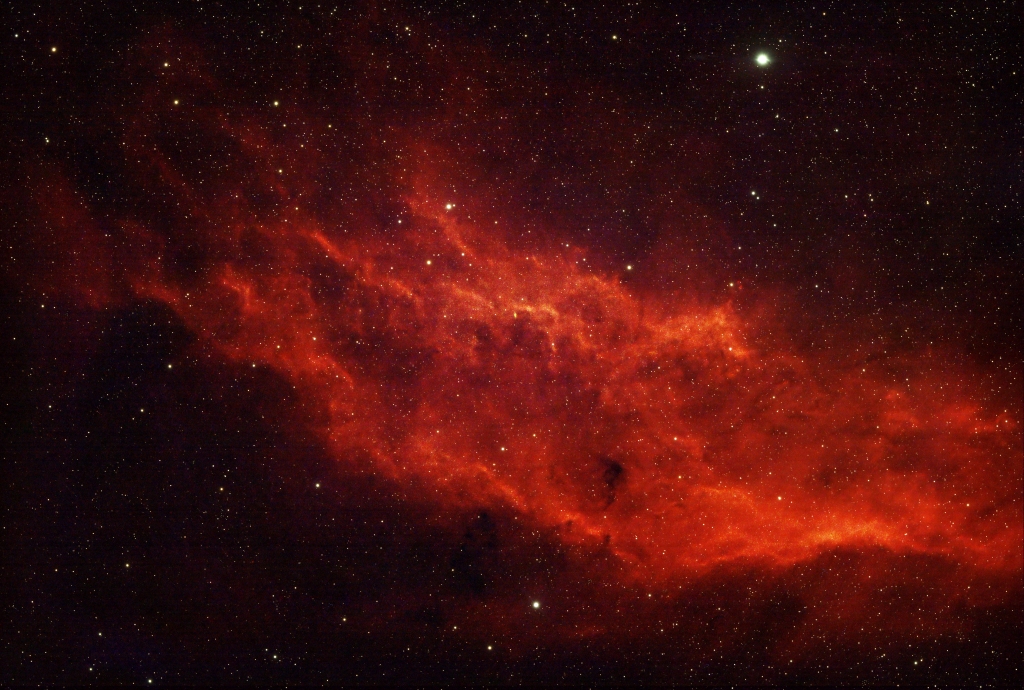
The above image represents 3 hours of Dual Band data, with 3 hours of RGB, for total of 6 hours integration time.
Despite its faintness, the California Nebula is a popular target for astrophotographers equipped with telescopes and specialized filters. These filters isolate specific wavelengths of light, allowing astronomers to capture the nebula’s intricate details and faint wisps of gas.
The California Nebula’s significance goes beyond its visual appeal. It serves as a valuable laboratory for astronomers studying star formation and the complex processes that occur within interstellar clouds. The nebula’s interaction with the nearby hot star, Xi Persei, provides insights into how stellar winds and radiation can sculpt the surrounding gas and dust, potentially triggering the birth of new stars.
So, the next time you gaze upwards on a clear night, remember that the California Nebula, a celestial echo of the Golden State, might be faintly glowing amongst the stars, a testament to the beauty and dynamism of our universe.
Discover more from Nicks Astrophotography
Subscribe to get the latest posts sent to your email.
 Nicks Astrophotography
One thought on “The California Nebula: A Celestial Mirror of the Golden State”