
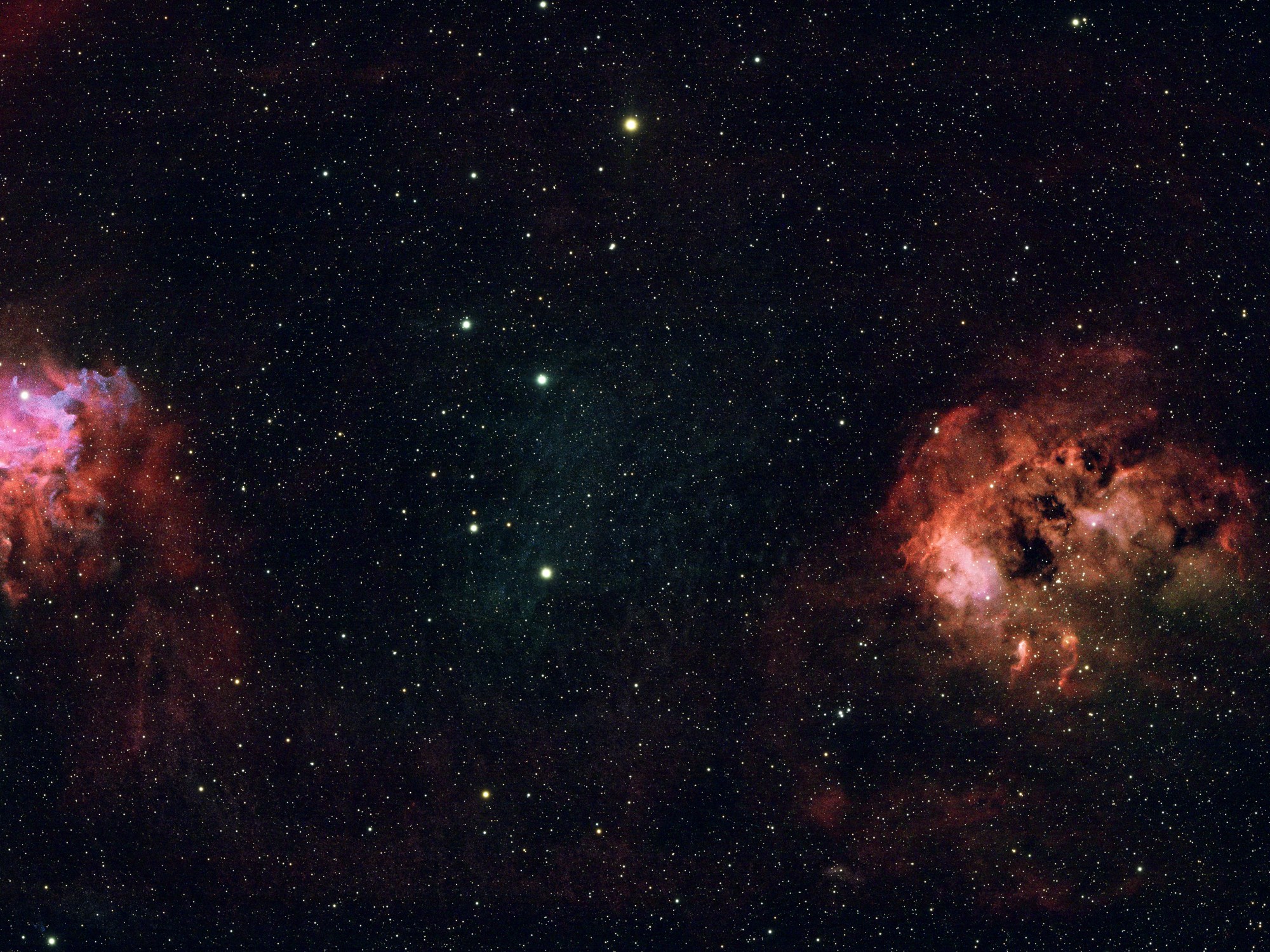
The night sky holds many wonders, and nestled in the constellation Auriga are two particularly eye-catching neighbors: the Tadpoles Nebula (IC 410) and the Flaming Star Nebula (IC 405).
The Flaming Star Nebula lives up to its name with its reddish glow, caused by ionized hydrogen gas. This fiery emission nebula is illuminated by a runaway star, AE Aurigae, a blue giant that races through space. Despite their apparent proximity in the sky, the Tadpoles Nebula is a much more distant resident, eight times farther from Earth than the Flaming Star Nebula.
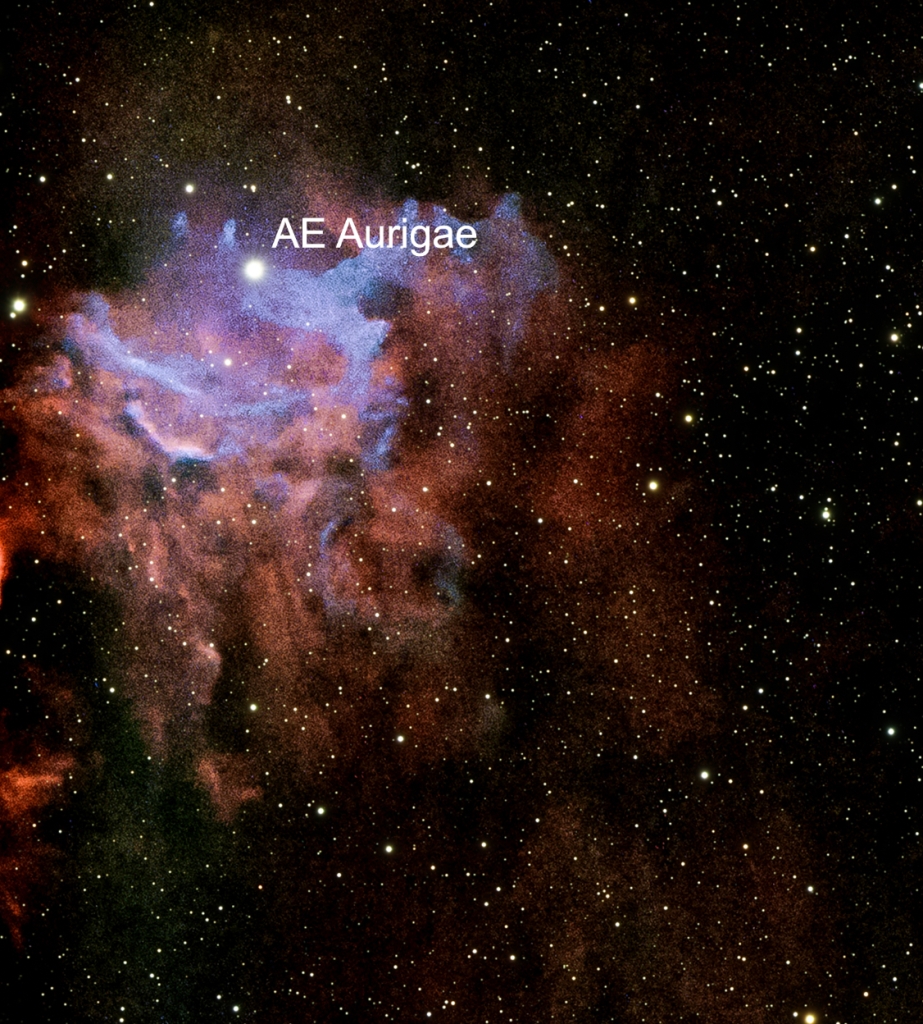
The above image shows the star AE Auriga which is primarily responsible for lighting up the flaming star Nebula.
The below image comprises of multiple nights shooting, approximately 4 hours of data, with a mixture of 180 second and 300 second exposures. Shot with Sony 405CC one shot color camera, and a UV/IR filter. Tracked on an AM5 mount, guiding with PHD2, imaging with NINA and processing with Pixinsight and Photoshop.
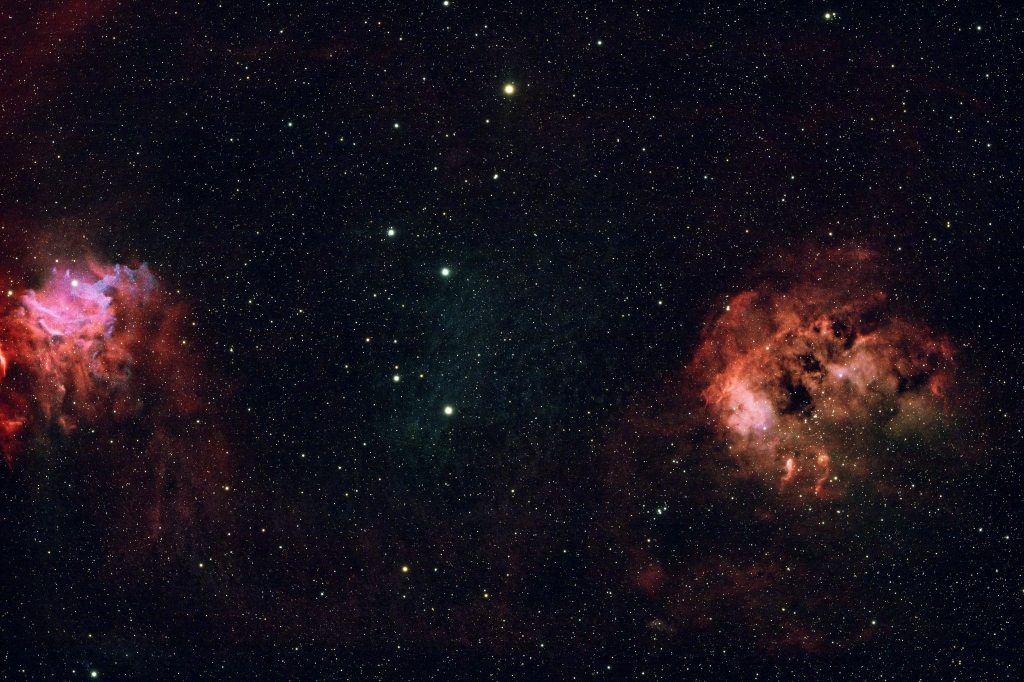
The Tadpoles Nebula gets its nickname from its wispy tails, which resemble tadpoles swimming through the cosmos. This immense nebula, spanning 100 light-years, is an emission nebula as well, fueled by the light of young stars within. The Tadpole Nebula is much fainter than the flaming star Nebula, partly due to its further distance from us. Therefore to capture these two Nebula in the same frame requires much longer exposure for the tadpole Nebula than the Flying Star. This is handled in post processing, to prevent the details of the Flaming Star Nebula from blowing out and becoming too bright.
As the Tadpole Nebula is primarily a Hydrogen Nebula, as is the Flaming Star, therefore to further enhance the above image, as with my California Nebula image, I plan on having a session on both these targets using the Dual Pass Hydrogen/Oxygen filter on my SVBony 405cc camera. I typically shoot both the California, and the Tadpoles/Flaming Star in sequence, as they follow each other in the night sky.
These celestial objects are a delightful paradox. The Flaming Star Nebula, though visually more prominent, is dwarfed by the Tadpoles Nebula in size. This is a trick of perspective – the Tadpoles Nebula’s grand scale is simply outmatched by its far greater distance.
For amateur astronomers, the Tadpoles and Flaming Star Nebulae are a rewarding target. With a wide-field telescope, both nebulae can be captured in a single frame, creating a stunning celestial tableau. Next time you gaze upwards on a clear night, see if you can spot these celestial fireworks lighting up the constellation Auriga.
Discover more from Nicks Astrophotography
Subscribe to get the latest posts sent to your email.


One thought on “Celestial Fireworks: The Tadpoles and Flaming Star Nebulae”